
One Week in Colombia: Cartagena, Medellín and Guatapé

This March, ten of us women spent a week in Colombia: three nights in Cartagena, three nights in Medellín, and a day trip to Guatapé. If you only do one thing, make it a private yacht day out to the Rosario Islands. It was my favorite day of the trip, right up there with a salsa lesson in the Old City and our stay at the Sofitel Legend Santa Clara. It’s also a trip that shows exactly why we love traveling as a group.
So here’s everything we did, where we stayed, and what I’d tell a friend planning the same trip.
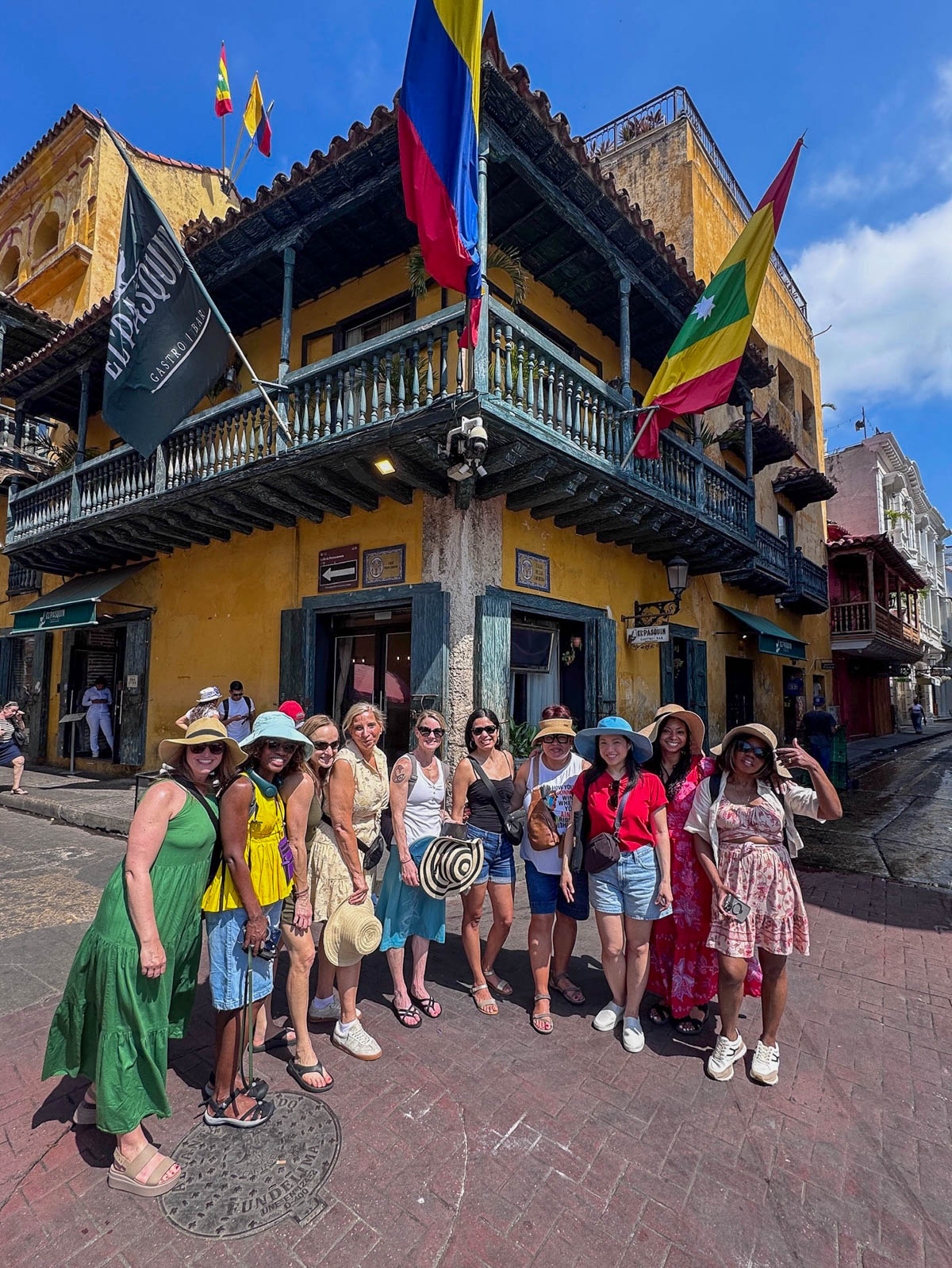
Trip at a Glance: Colombia
- Where: Cartagena, Medellín, and Guatapé, Colombia
- Getting there: Fly into Cartagena (CTG), take the short flight to Medellín (MDE), and fly home from Medellín
- How long to stay: 7 days, with 3 nights in each city and Guatapé as a day trip from Medellín
- Best time to go: We went in mid March. Cartagena was hot and sunny, with highs in the mid 80s and the sea around 84°F, perfect for our yacht day. Medellín was much milder, with days in the 70s and evenings that dropped into the 50s, so pack a light jacket.
- Where we stayed: Sofitel Legend Santa Clara in Cartagena and Marquee Medellín
- Don’t miss: A private yacht day in the Rosario Islands, a salsa lesson, and Comuna 13
- Pack: Light dresses and sandals for Cartagena, polished casual for Medellín, walking shoes for Guatapé, and a light jacket for evenings
Jump to: Our Route · Cartagena · Medellín · Guatapé · What to Eat · Getting Around · FAQs · Final Thoughts
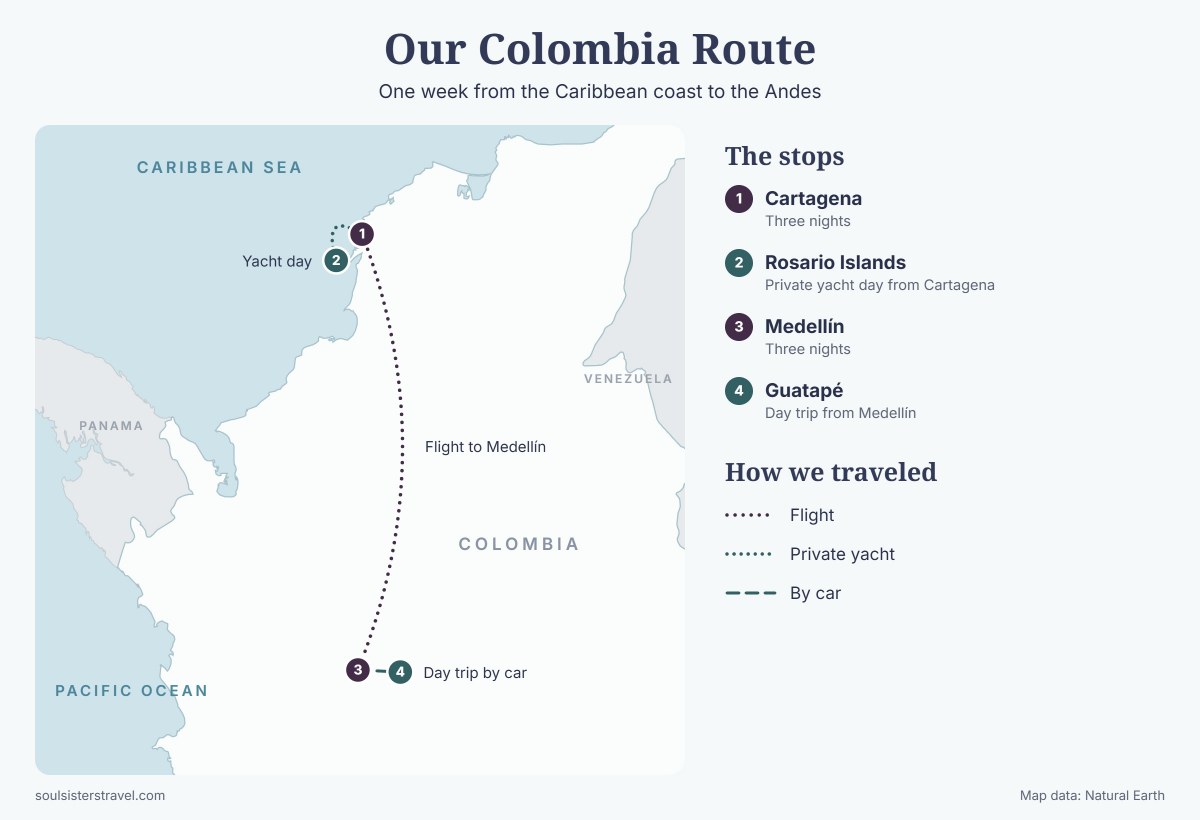
Our Colombia Route
Much like our Italy itinerary, this route was a simple line across the country. We started on the Caribbean coast, then flew about an hour and 15 minutes into the mountains, and finally took one long day trip out to the lakes. You can see the whole route on Google Maps.
- Cartagena: the walled colonial city on the Caribbean coast, and our base for the Rosario Islands
- Medellín: the City of Eternal Spring, up in the Andes
- Guatapé: a colorful lakeside town about two and a half hours from Medellín, home of El Peñol
Cartagena: Three Nights in the Walled City
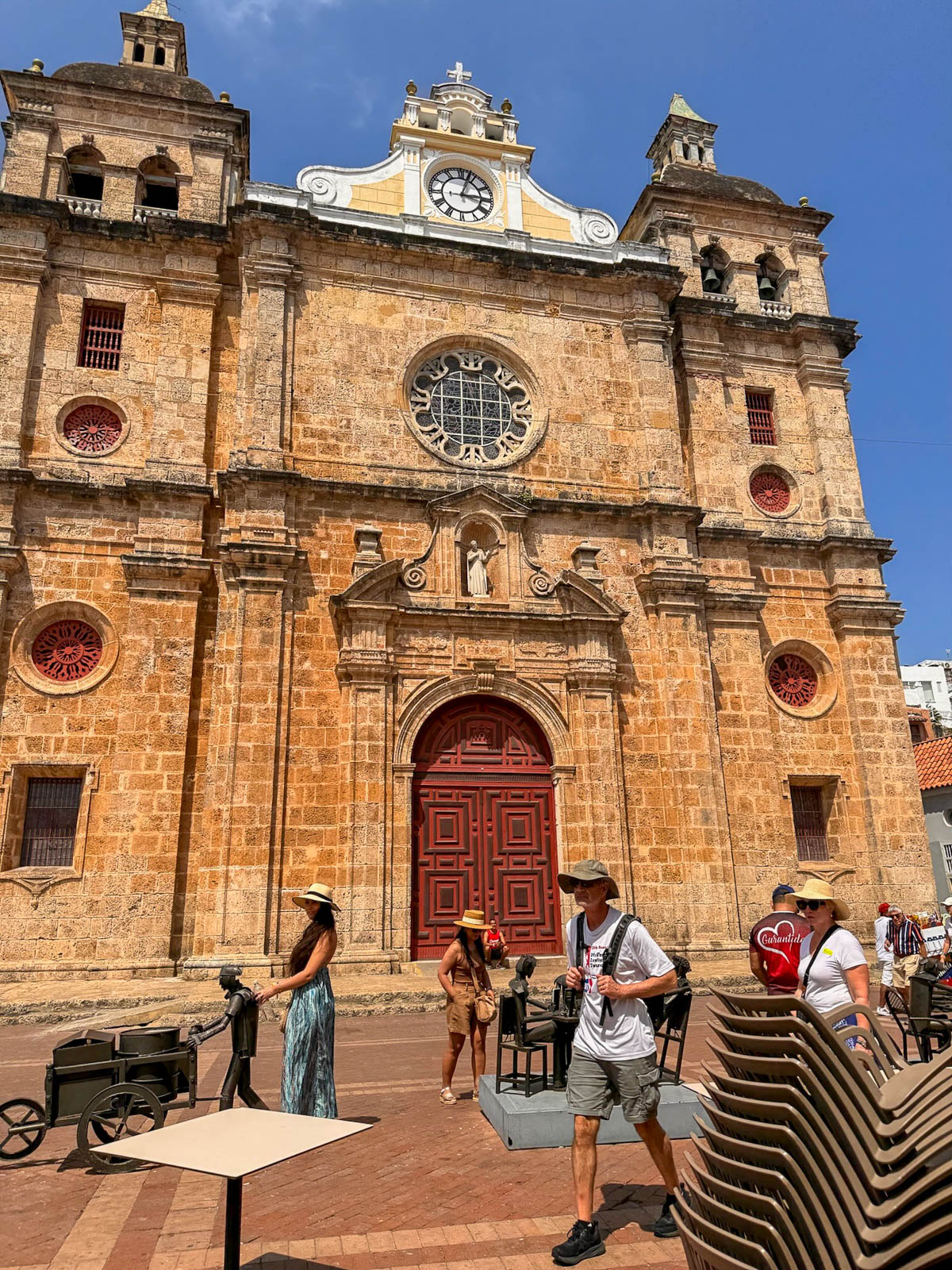
Cartagena was our first stop, and it set the tone for the whole trip. The Old City is all cobblestones, balconies spilling with flowers, and buildings painted every color you can think of. Although we spent three nights here, I’d happily go back for more.
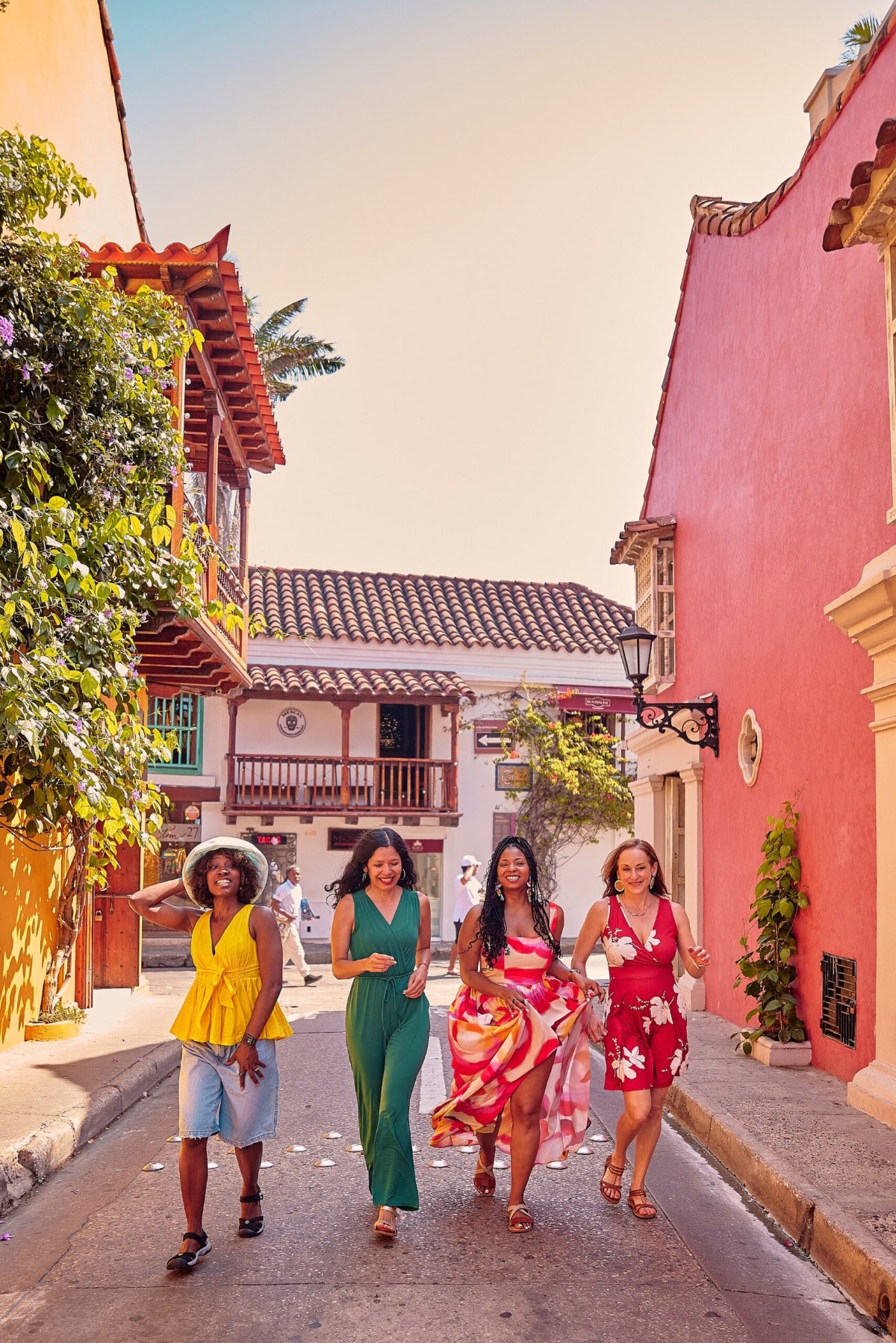
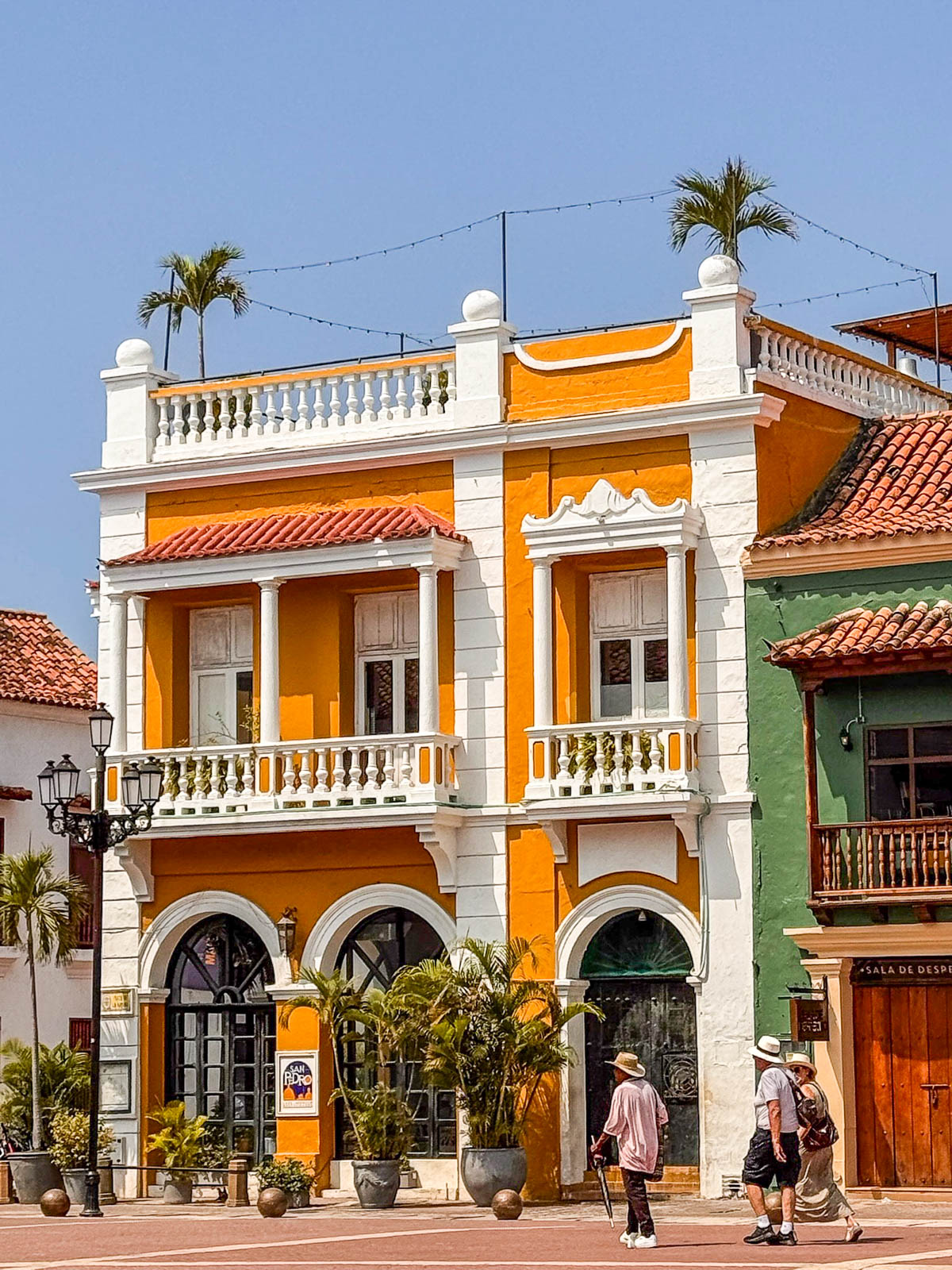
Photo on the left by Carlos Maestre.
Where We Stayed: Sofitel Legend Santa Clara
Our home in Cartagena was the Sofitel Legend Santa Clara, a 17th century convent turned luxury hotel in the quiet San Diego neighborhood of the walled city. In fact, it was one of the highlights of my trip. The courtyard was fantastic, and the breakfast buffet had a huge array of foods and fresh fruits. On top of that, our room was cozy and quiet, with the comfiest beds.
Being inside the walls meant we could walk almost everywhere, and coming back to the cool, quiet courtyards after a hot afternoon in the streets felt like a reward every single time.
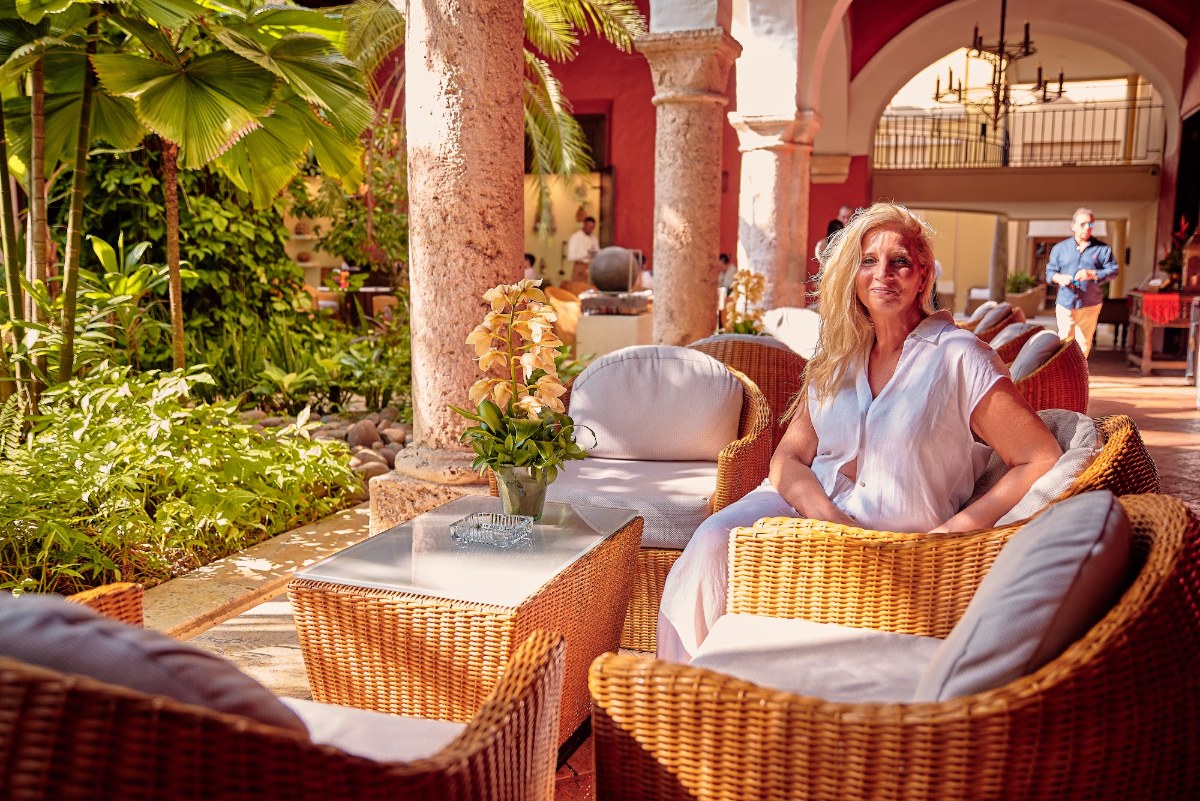
Photo by Carlos Maestre.
Day 1: Arrival and Dinner at Candé
- Afternoon: We trickled into Cartagena on different flights, checked in at the Sofitel, and wandered the Old City streets.
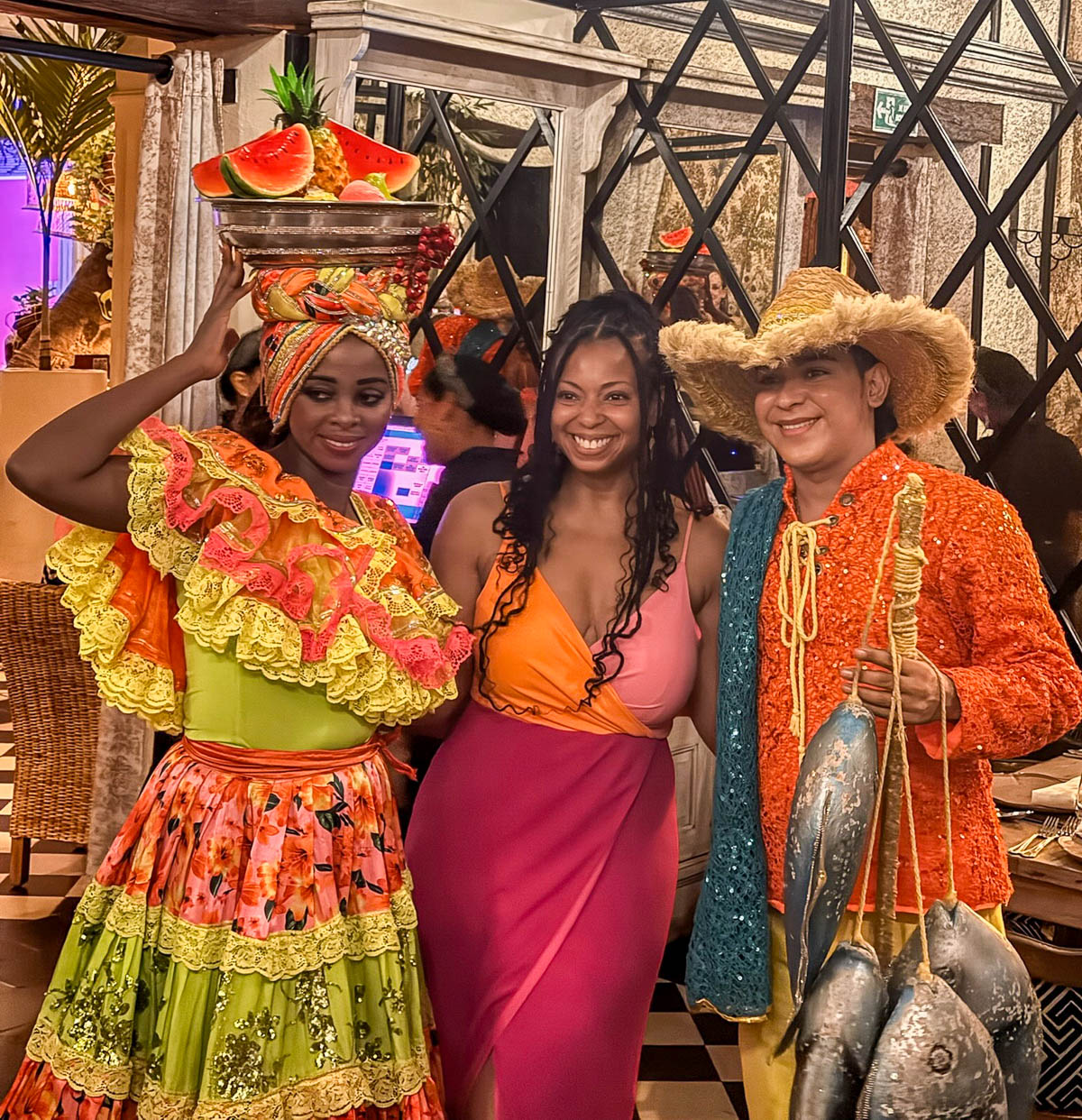
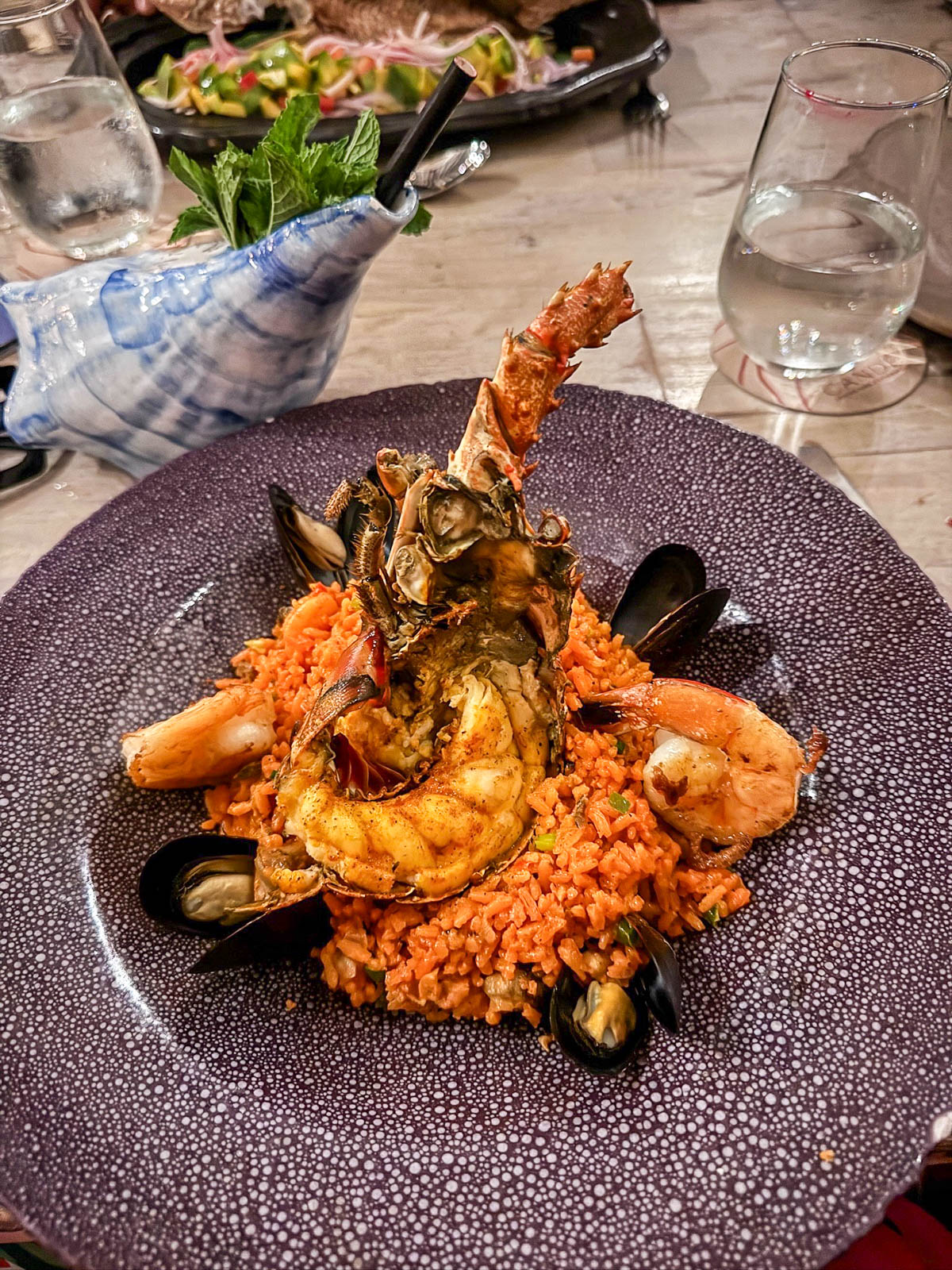
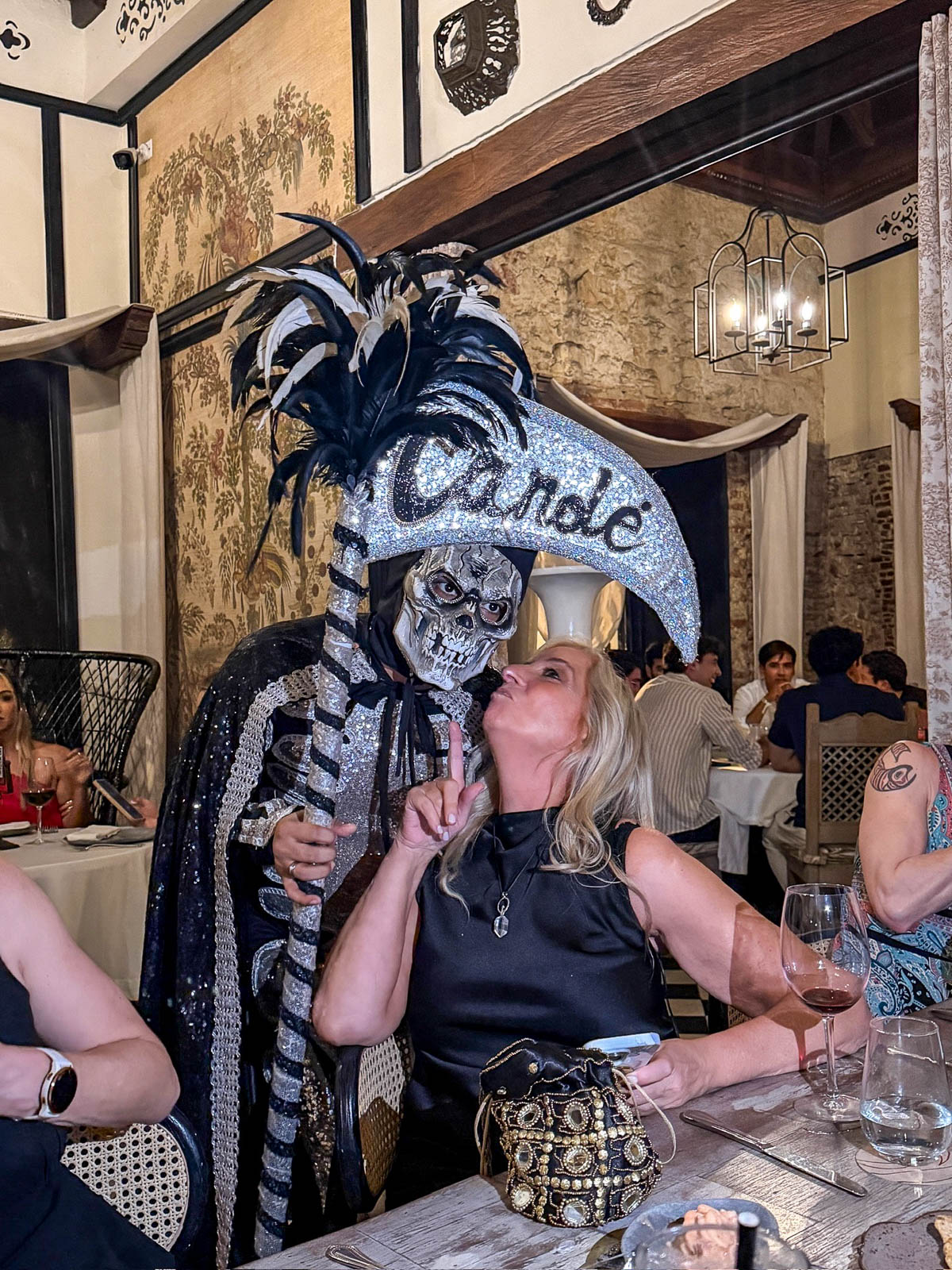
- Evening: Dinner at Candé, where Colombian food comes with live music and dance.
Day 2: Walking Tour, Photoshoot, and Salsa
- Morning: The Cartagena Walled City Colonial Tour, a guided walking tour of the historic district with our guide, Isaac.
- Midday: Lunch back at the Sofitel, at the hotel restaurant.
- Afternoon: Our group photoshoot in the Old City streets.
- Evening: A salsa lesson in the Old City with Real Experience Cartagena.
Day 3: Rosario Islands by Private Yacht
- Morning: A quick stop at Carulla, a Colombian supermarket, for snacks and drinks, then we boarded our private yacht from Botegena.
- Midday: Island hopping, swimming, and a lunch of fried fish at PA’UE Beach Lounge, a beach club on one of the islands.
- Evening: Back to the Sofitel for a quiet night.
1. Spend a Day on a Private Yacht in the Rosario Islands
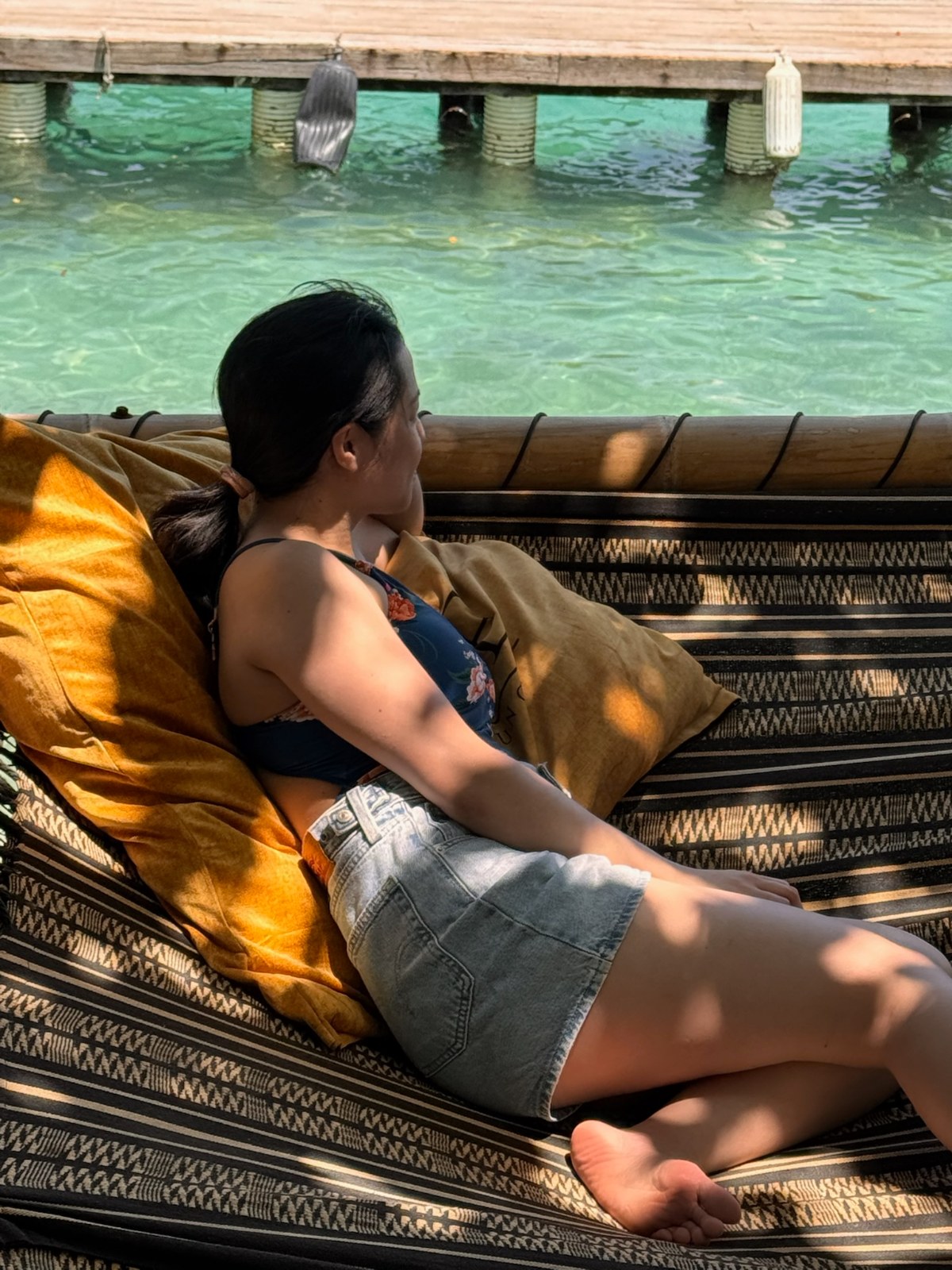
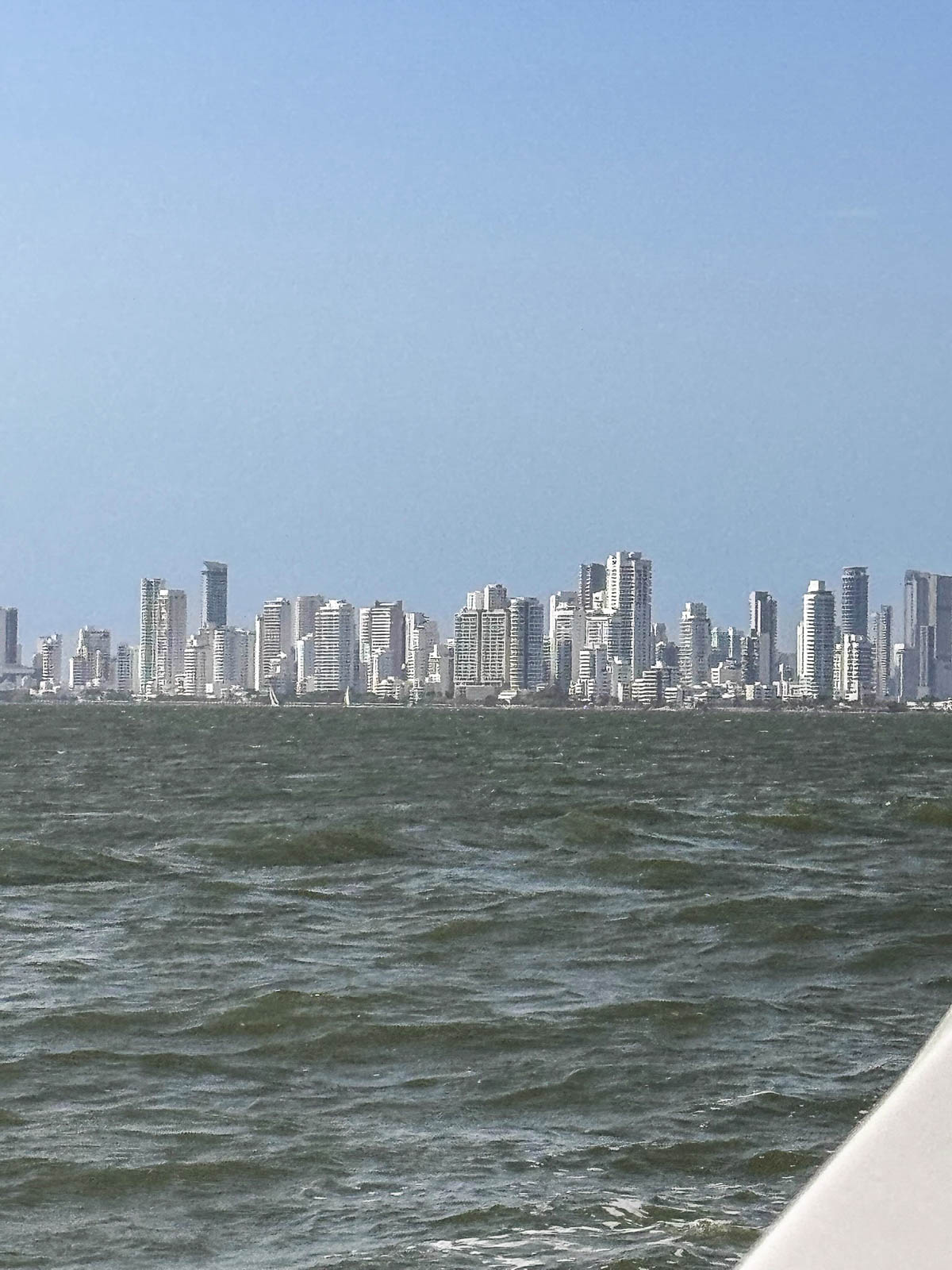
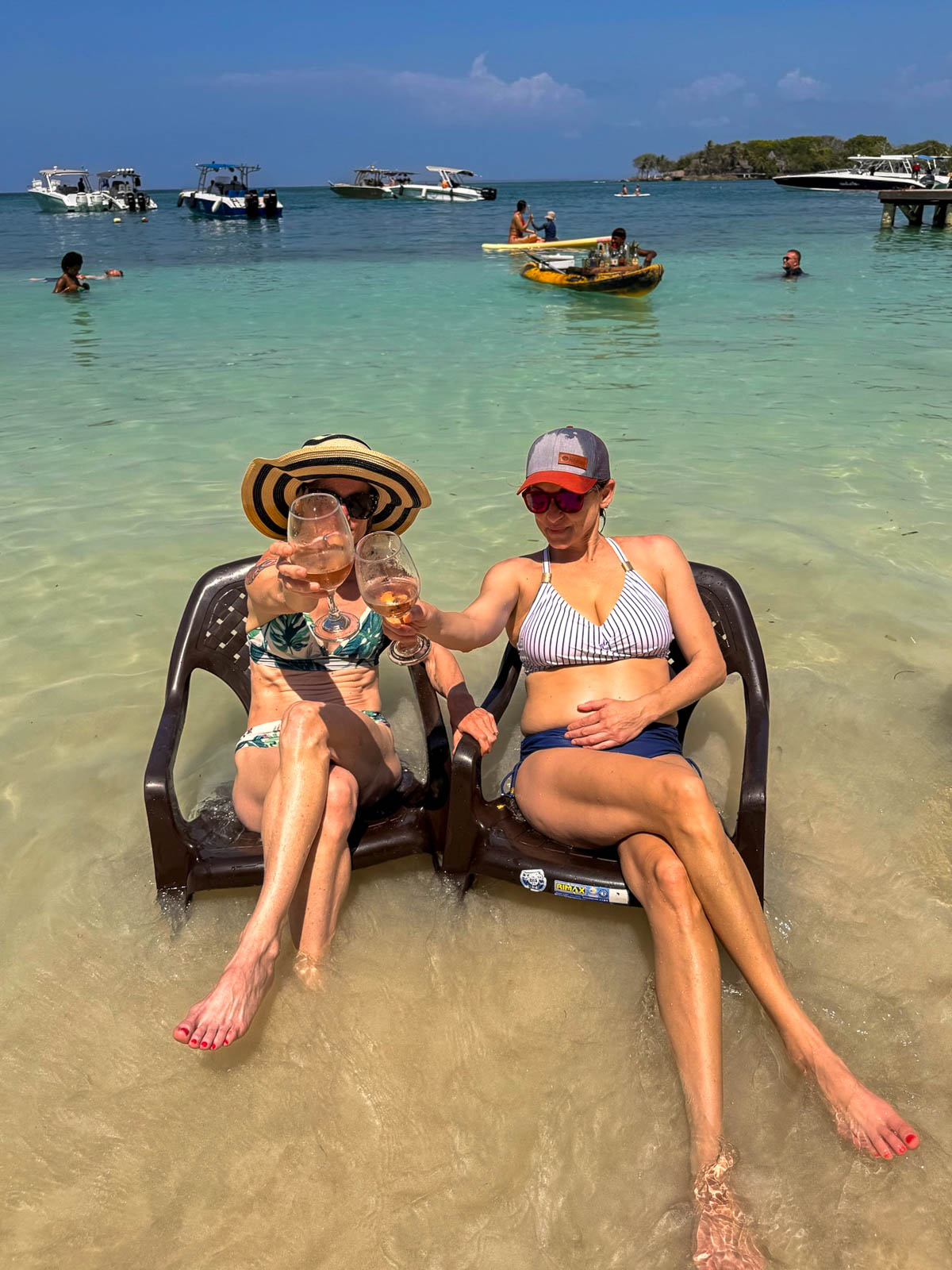
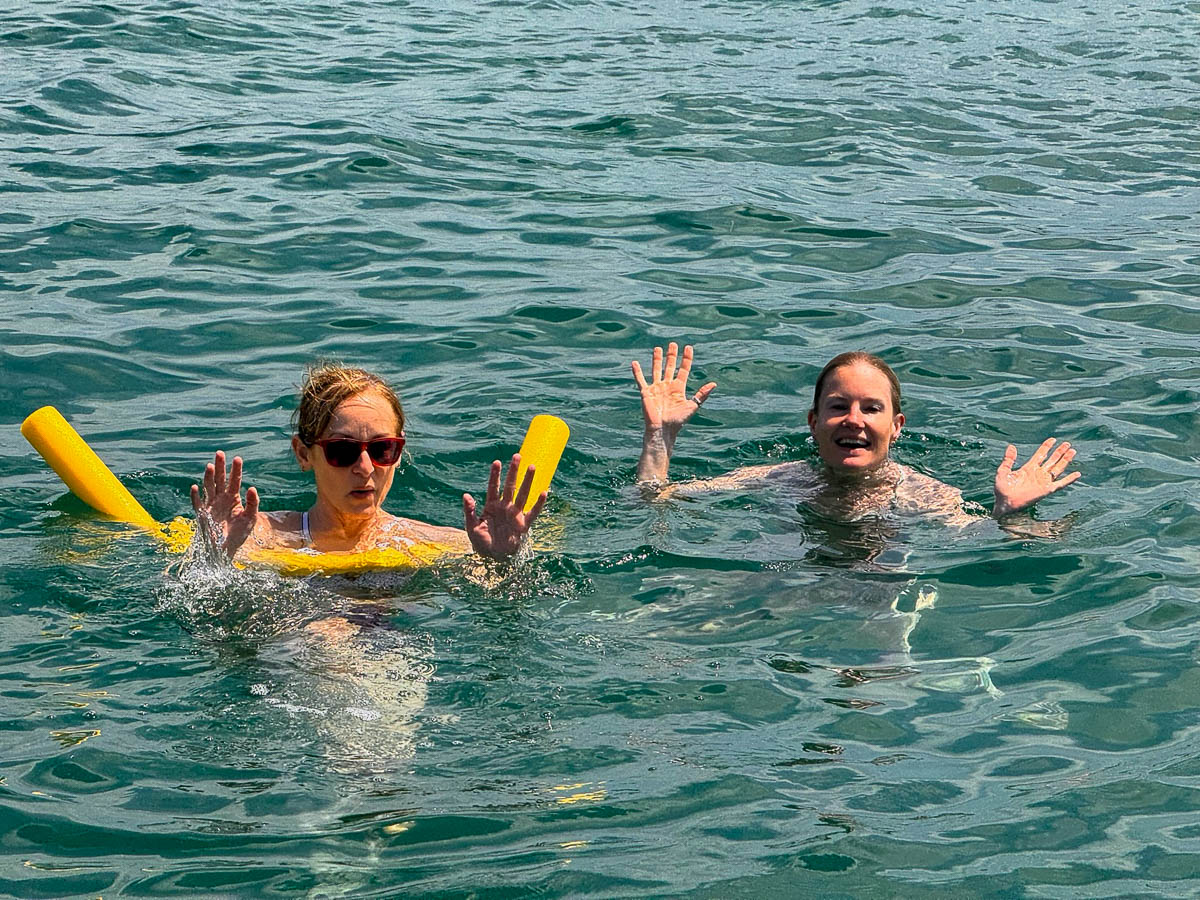
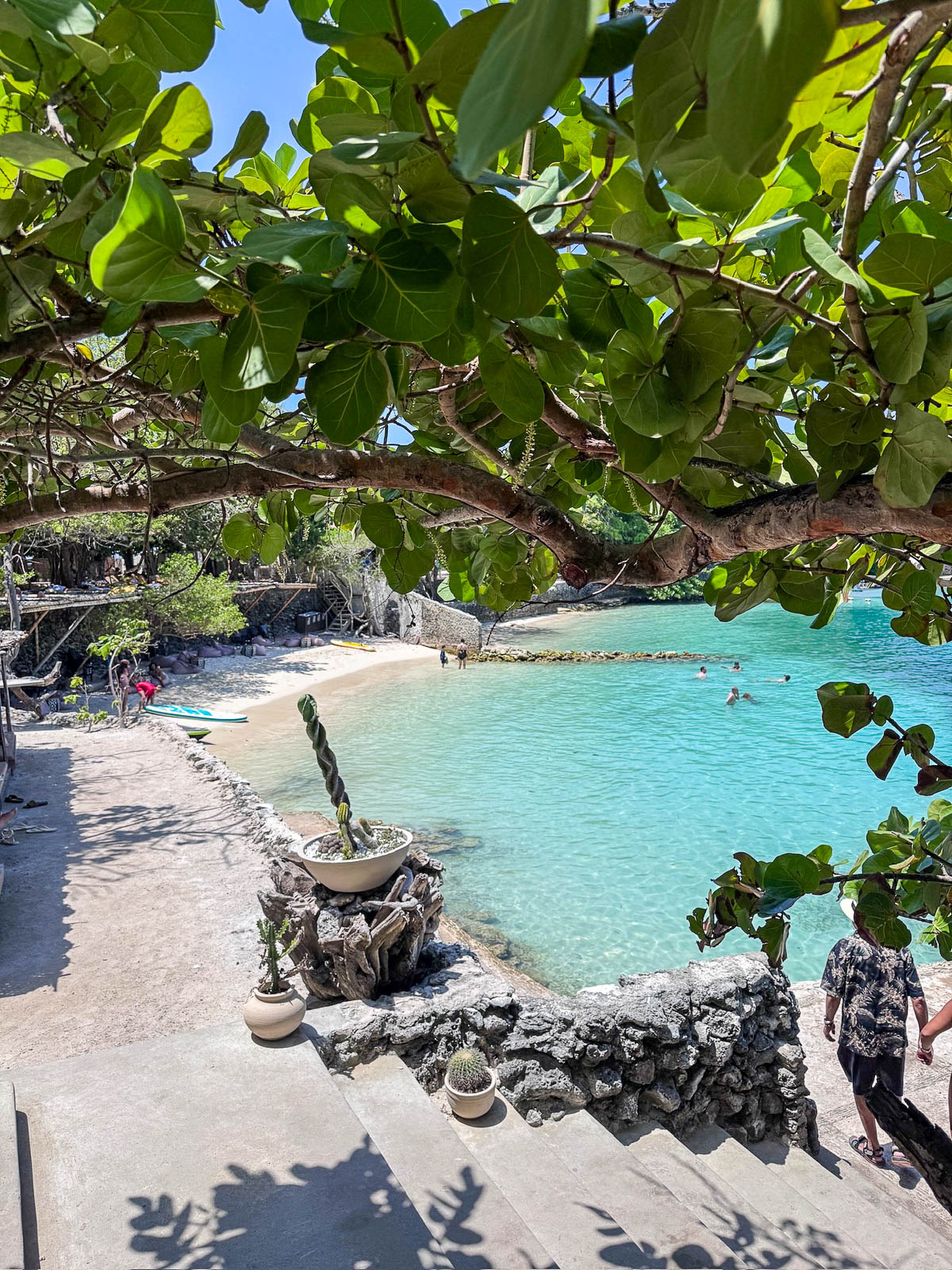
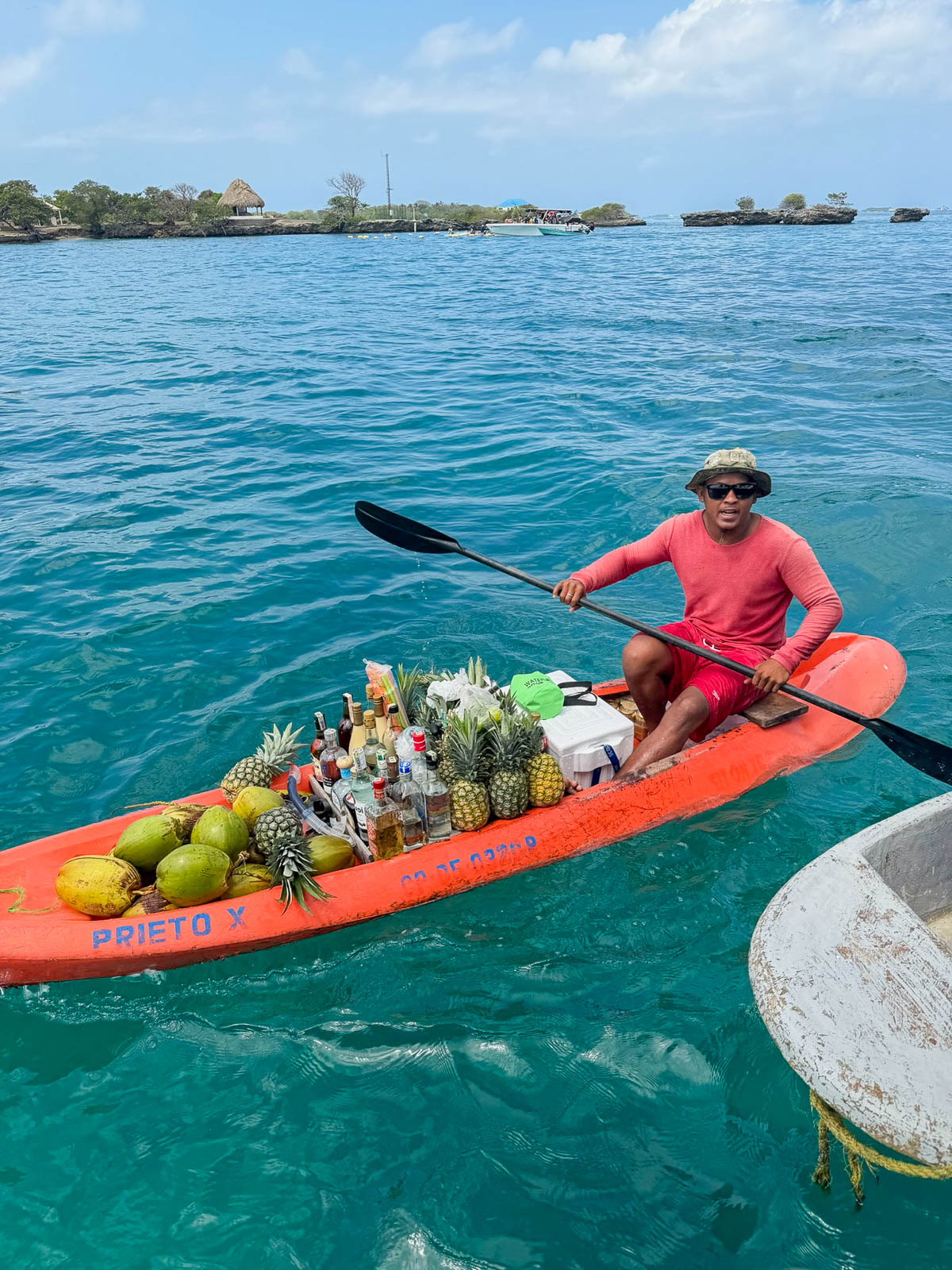
If you do one thing in Cartagena, make it this. The Rosario Islands are a chain of small islands about an hour by boat from the city, with clear turquoise water and coral reefs. Having our own yacht for the day meant we set the pace: we swam when we wanted, lounged on deck, sat in chairs right in the shallow water, and stopped for lunch at PA’UE Beach Lounge. It was perfect for relaxing, but know that the club charges an entry fee of 50,000 COP per person. Meanwhile, vendors even paddle out in kayaks piled with fresh fruit. Above all, my favorite moment was relaxing in hammocks strung over the ocean among the trees.
If you love a day on the water, we also have a boat day in our Amalfi Coast guide.
My tip: I highly suggest stopping at a grocery store like Carulla for snacks and drinks before you board. It makes the day on the boat so much easier.
2. Take a Salsa Lesson in the Old City
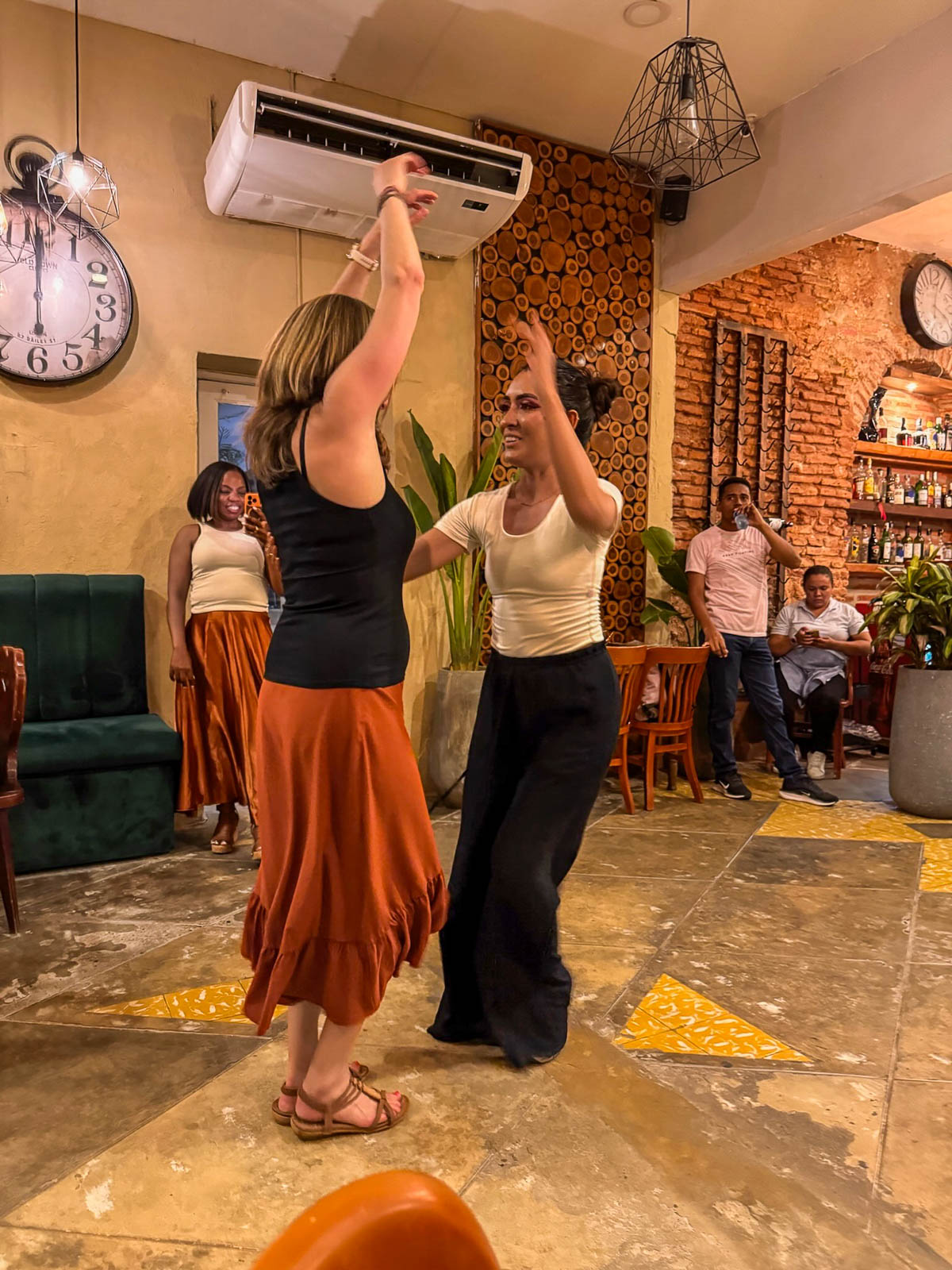
This was one of my favorite nights of the whole trip. The lesson was planned for a rooftop, but our group was too big, so it moved into a restaurant instead. After a long, hot day, we appreciated the air conditioning, and honestly, I think it worked out better than the rooftop would have. Overall, it was pure fun from start to finish.
If salsa is a big part of why you want to visit Colombia, don’t skip it. After all, a class is the most fun way to feel the city’s rhythm.
3. Walk the Historic District with a Guide
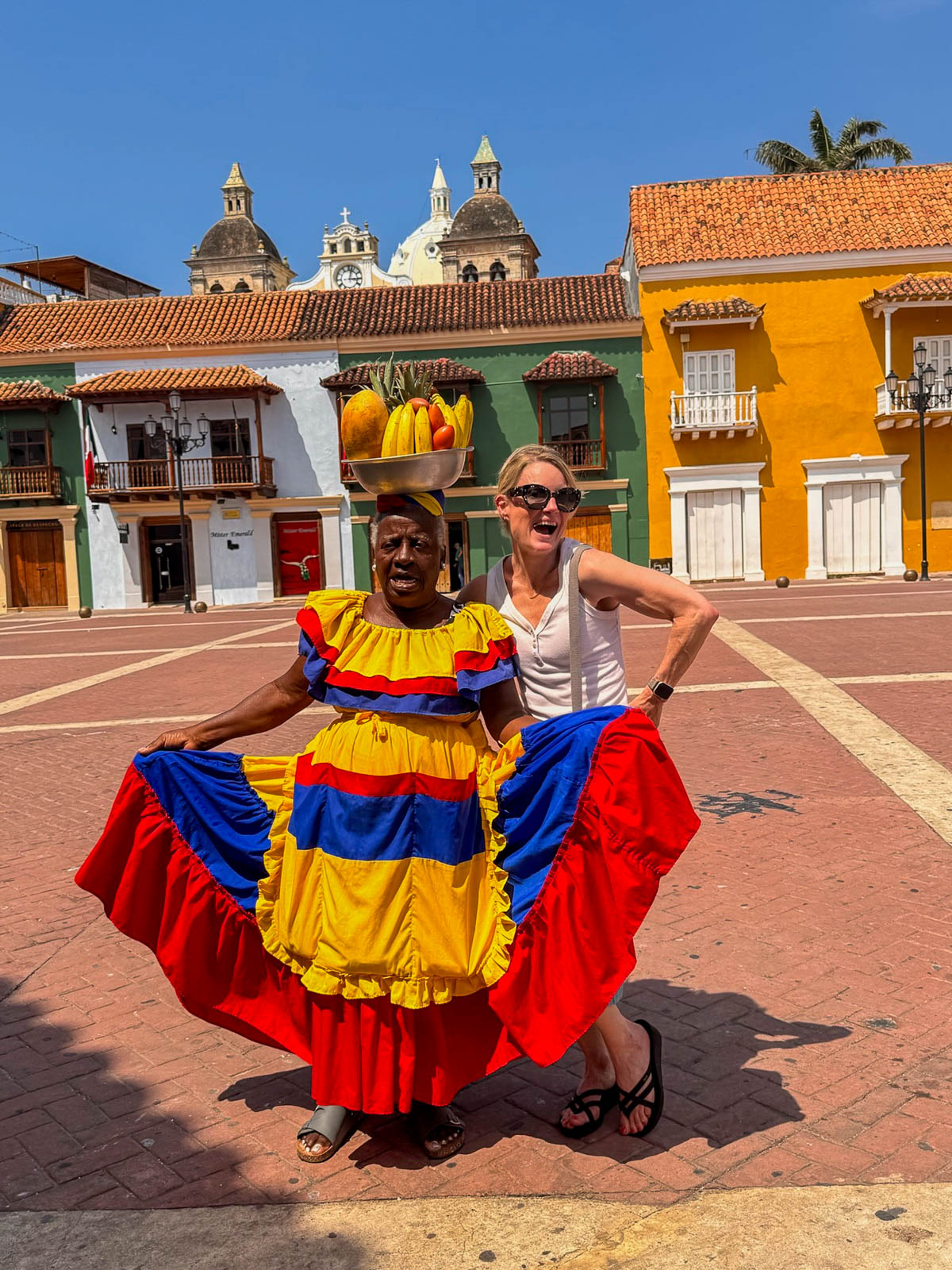
A guide brought the Old City’s history to life, from its colonial walls and churches to the Afro-Caribbean roots that shape its food, music, and markets. You’ll also see palenqueras, women in bright dresses carrying bowls of fruit on their heads, all over the Old City. Doing this on our first full day made the rest of our wandering so much richer.
4. Book a Photoshoot in the Old City
Cartagena’s colorful walls are made for photos, so we booked a professional photographer, Carlos Maestre, for a group photoshoot in the Old City streets. We posed with palenqueras, under wooden balconies, and against walls in every color. If you’ve seen our flying dress photoshoot guide, you know we love a good photoshoot on a trip.
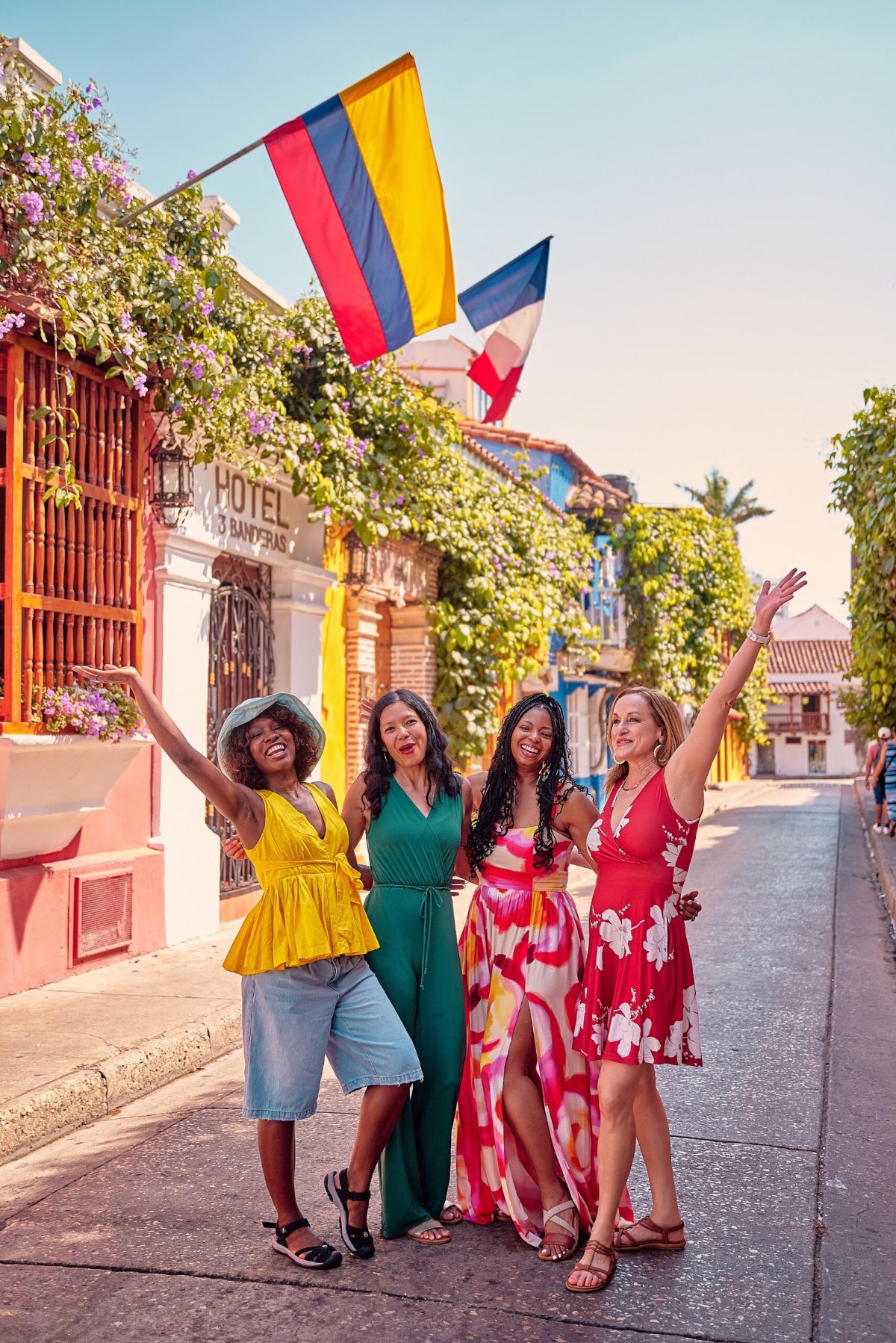
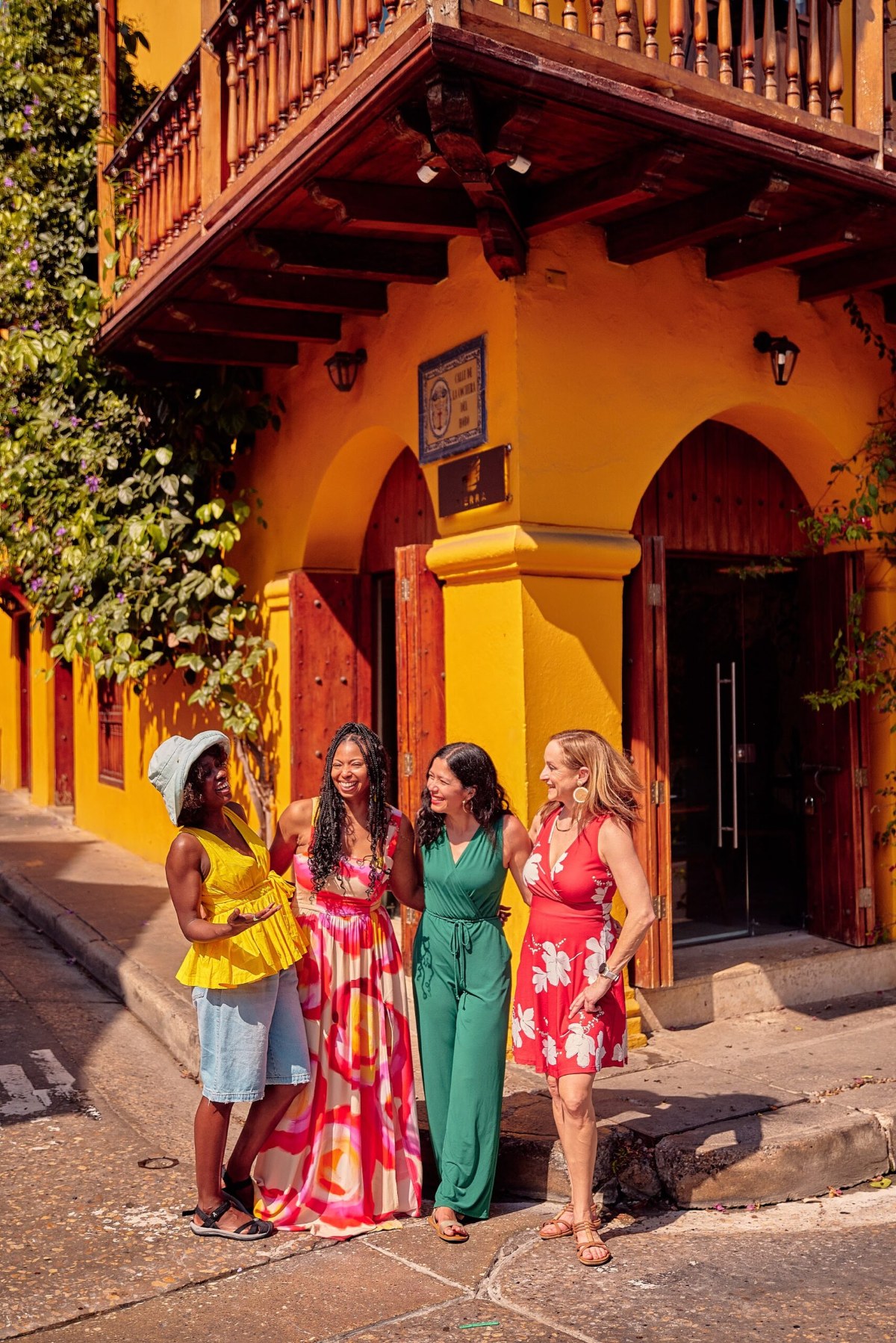
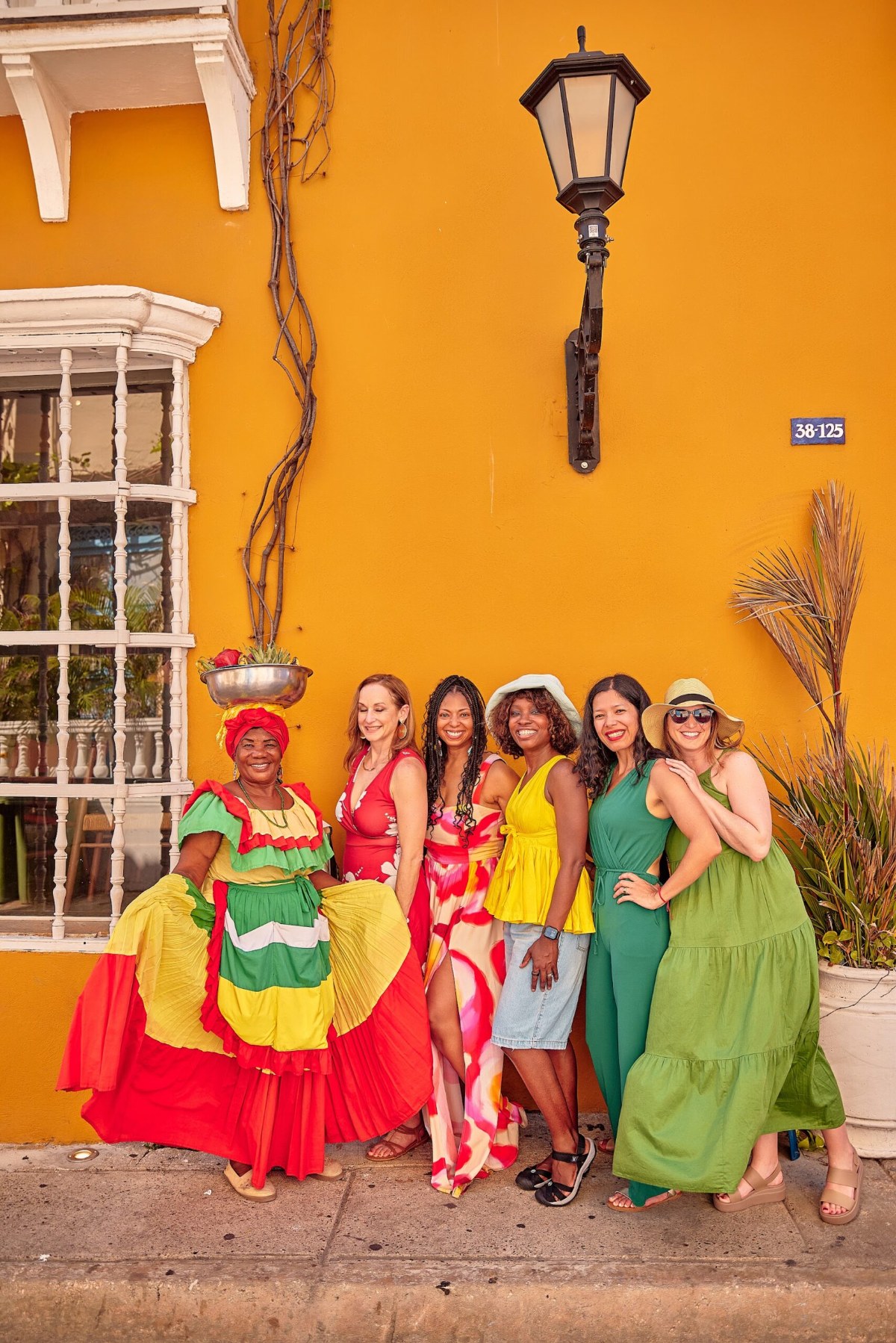


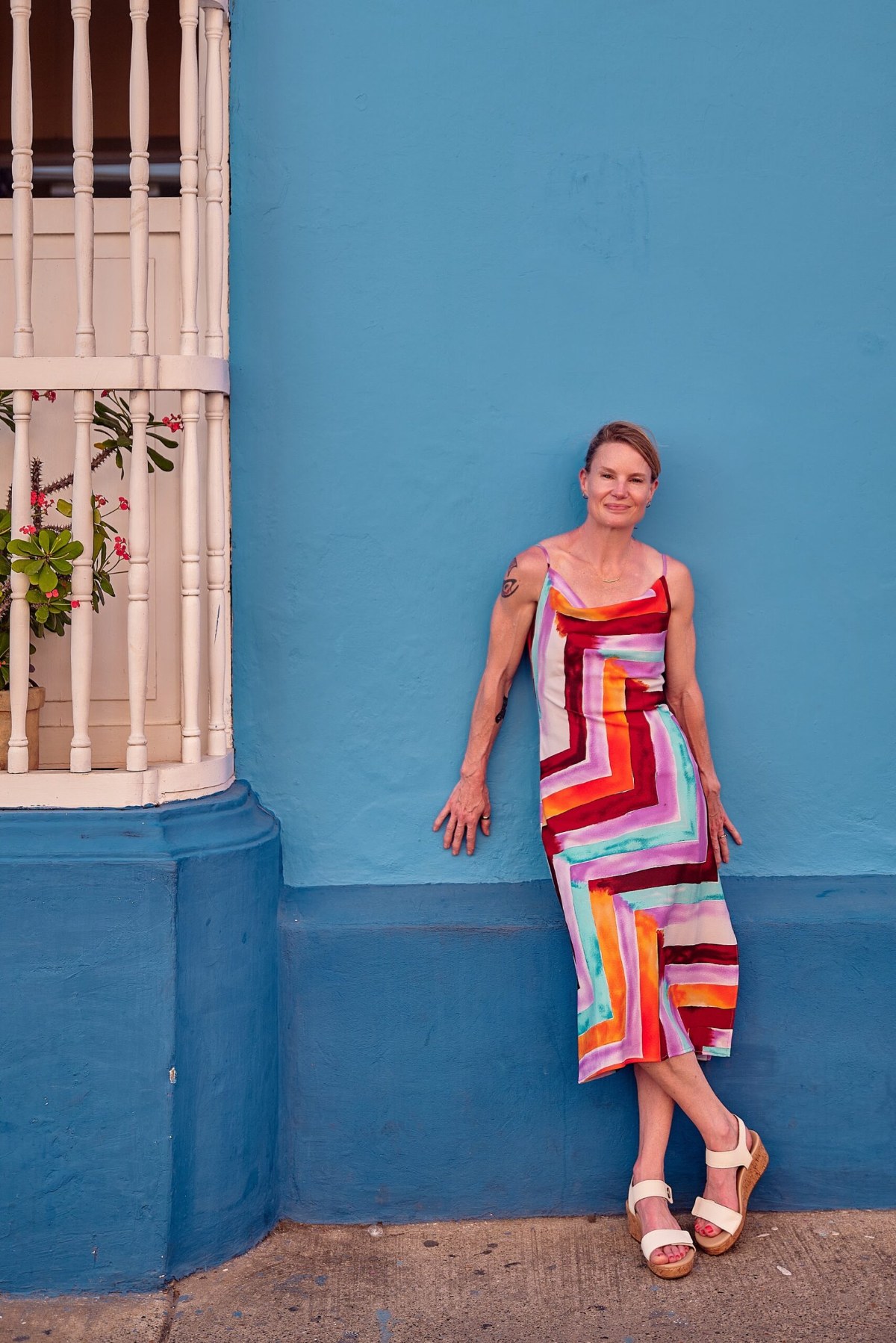
Photos in this section by Carlos Maestre.
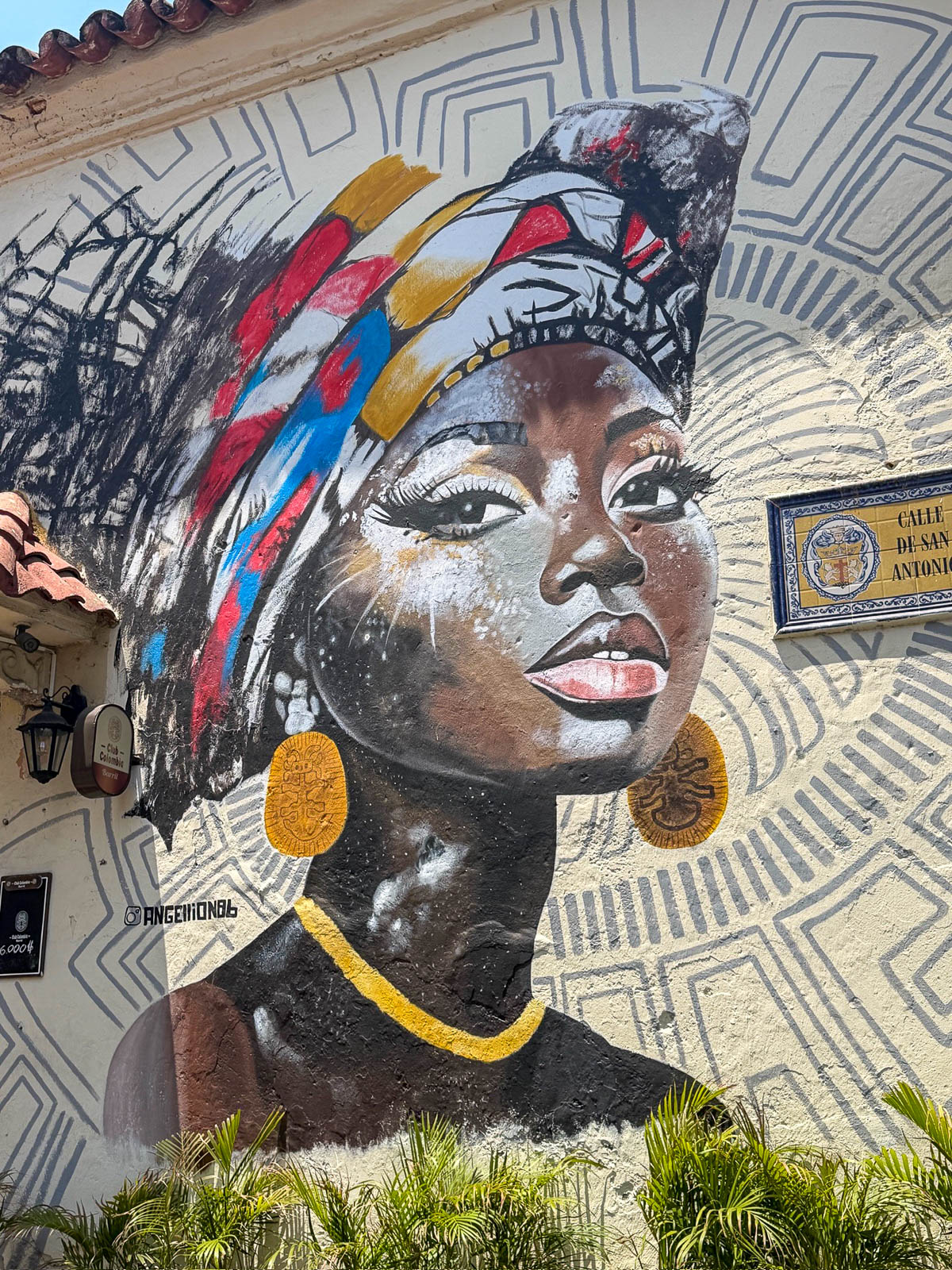
5. Wander the Street Art in Getsemaní
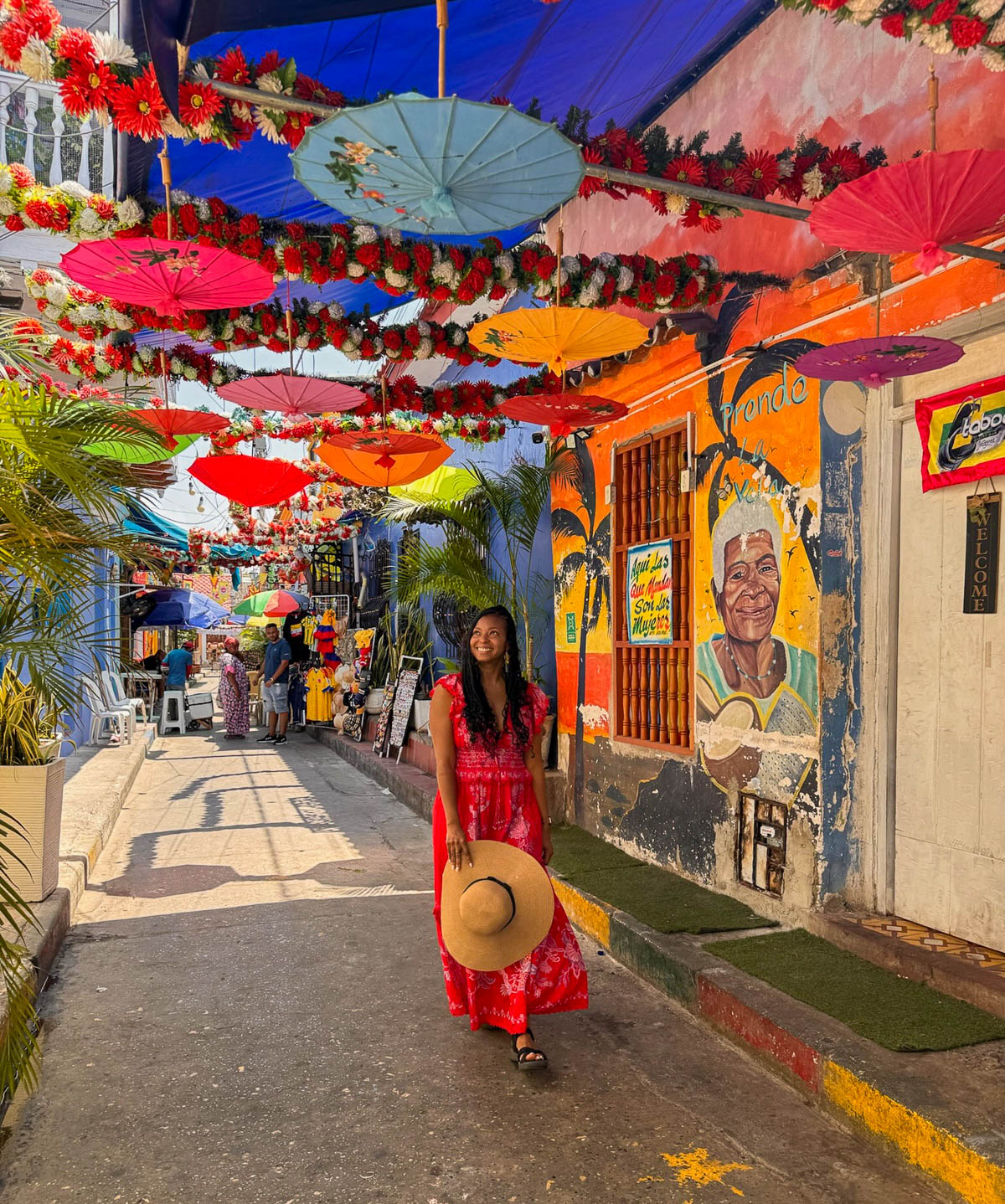
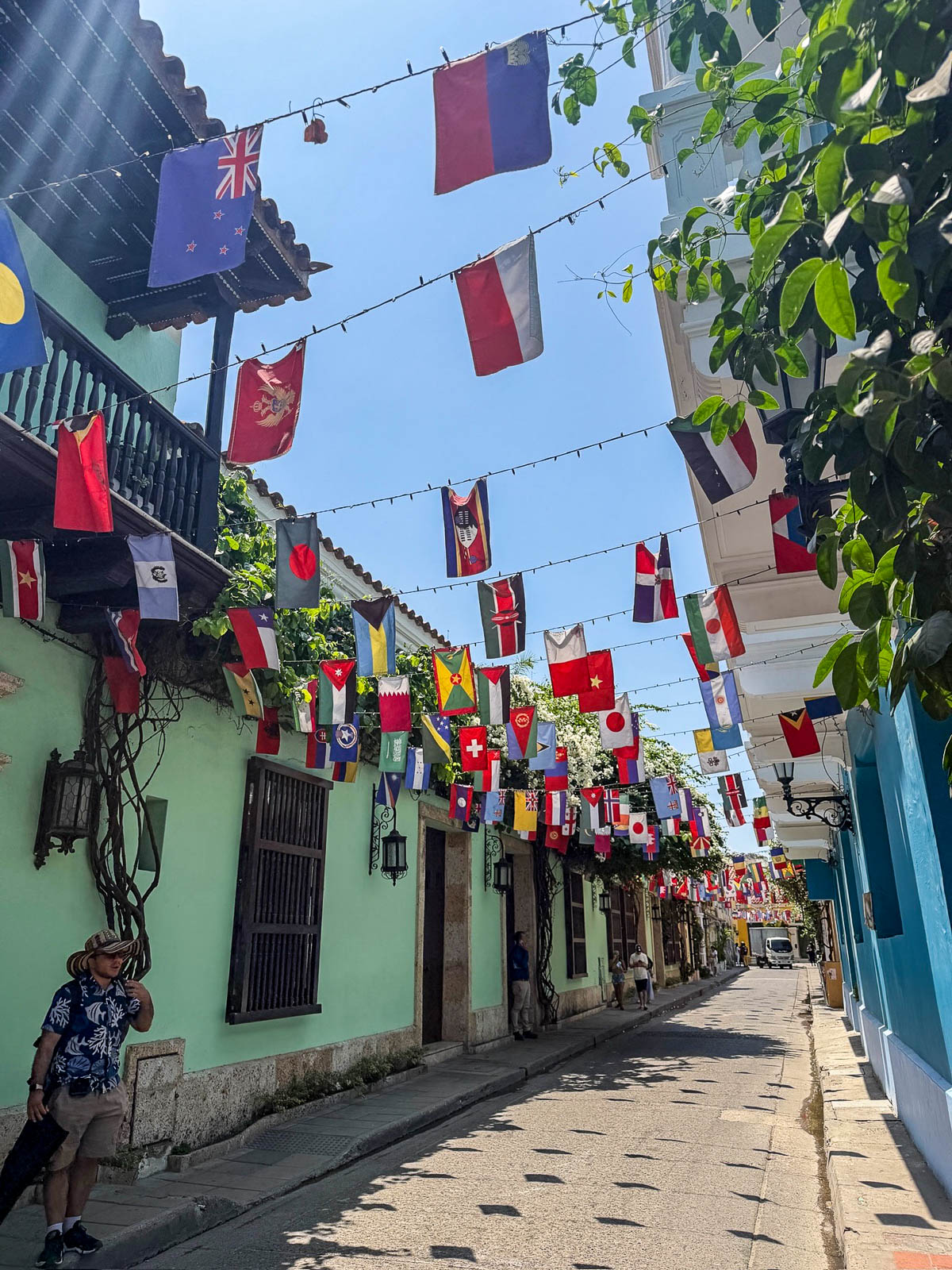
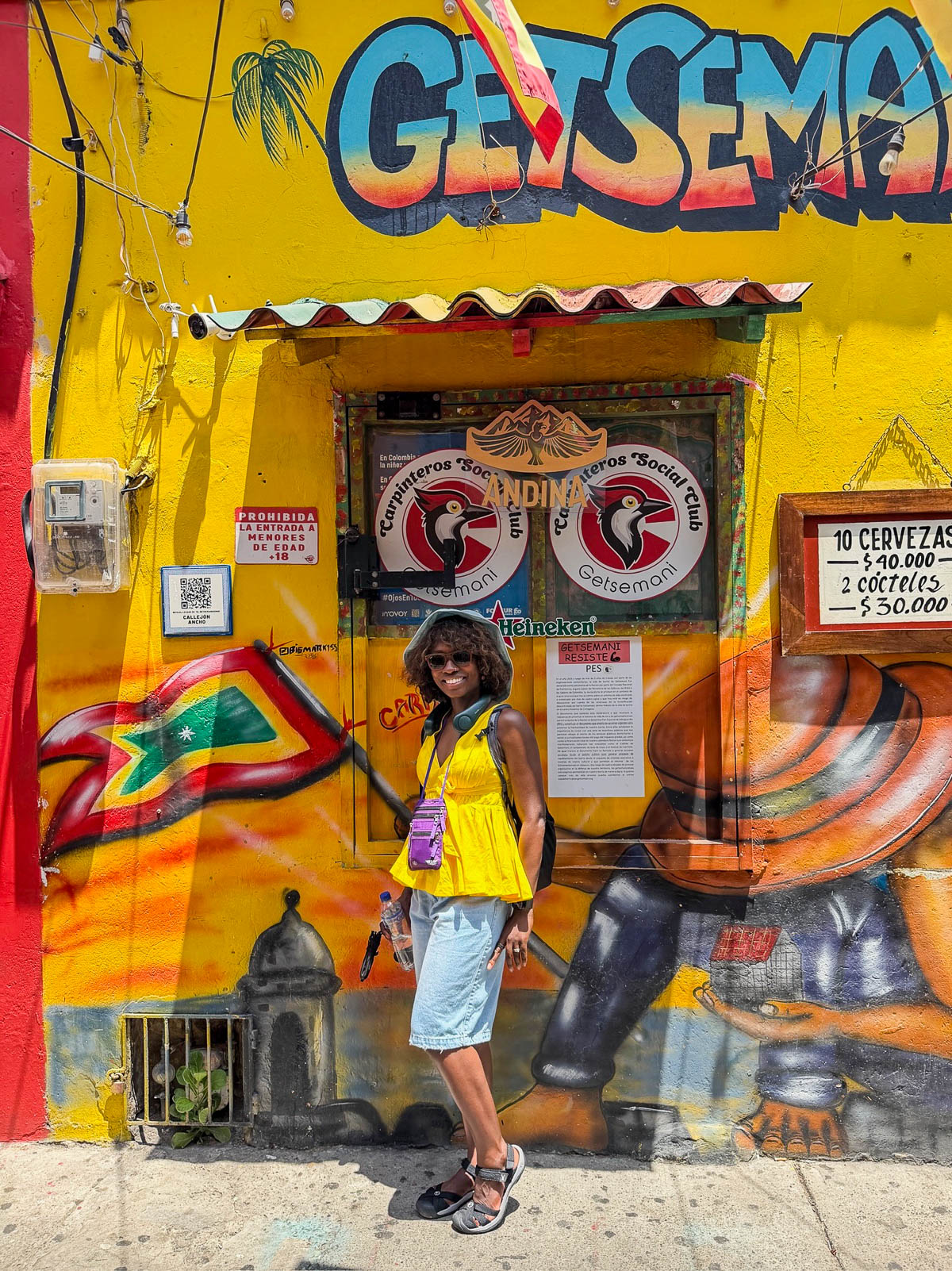
Just outside the old city walls, Getsemaní is Cartagena’s most colorful neighborhood, with murals on nearly every wall, flags strung across the streets, and umbrellas hung overhead. We explored it as part of our walking tour. So bring your camera and give yourself time to wander.
Medellín: Three Nights in the City of Eternal Spring
After the heat of the coast, Medellín felt like a different country. It sits in a valley in the Andes and is known as the City of Eternal Spring for its mild weather all year. Whereas Cartagena is about history, Medellín is about how much the city has changed.
Where We Stayed: Marquee Medellín
In Medellín we stayed at Marquee Medellín, a modern hotel with a rooftop pool. After three nights in a historic convent, it was a fun change of pace. The hotel was also right in the middle of everything. One warning: the neighborhood is a party area and can get loud at night. Because of that, the hotel actually leaves earplugs in the rooms to help.
Day 4: Fly to Medellín
- Morning: An early JetSMART flight from Cartagena, leaving at 8:04 am and landing in Medellín at 9:19 am.
- Afternoon: A free afternoon relaxing at the hotel.
- Evening: Dinner at Mondongo’s, a classic Medellín restaurant, where I had the bandeja paisa.
Day 5: City Tour and Cooking Class
- Morning to early afternoon: A private tour of Medellín, including the metro, the cable cars, street food, and Comuna 13.
- Late afternoon and evening: A Colombian cooking class, where we ate what we made for dinner.
1. Tour the City and Comuna 13 with a Local Guide
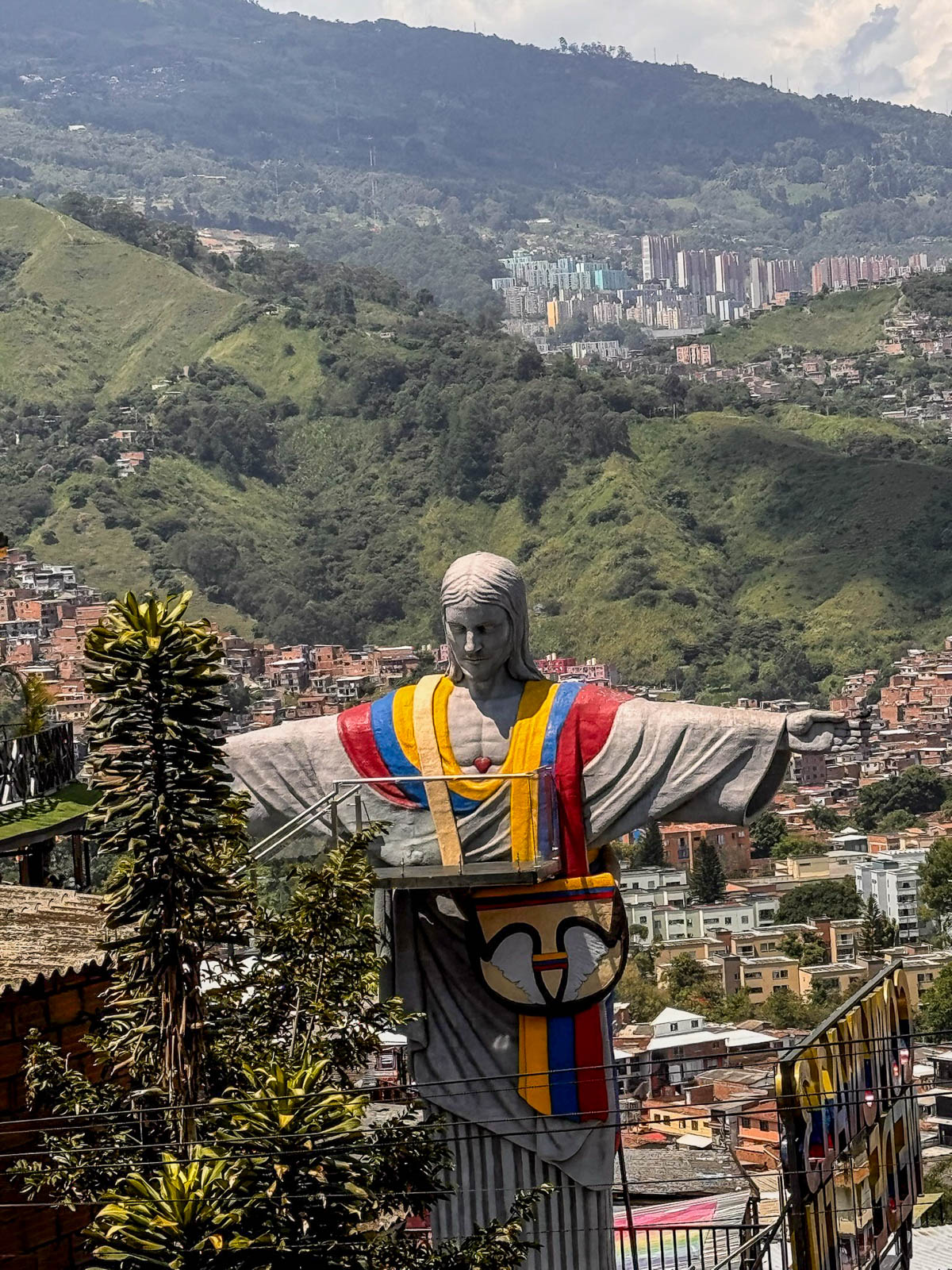
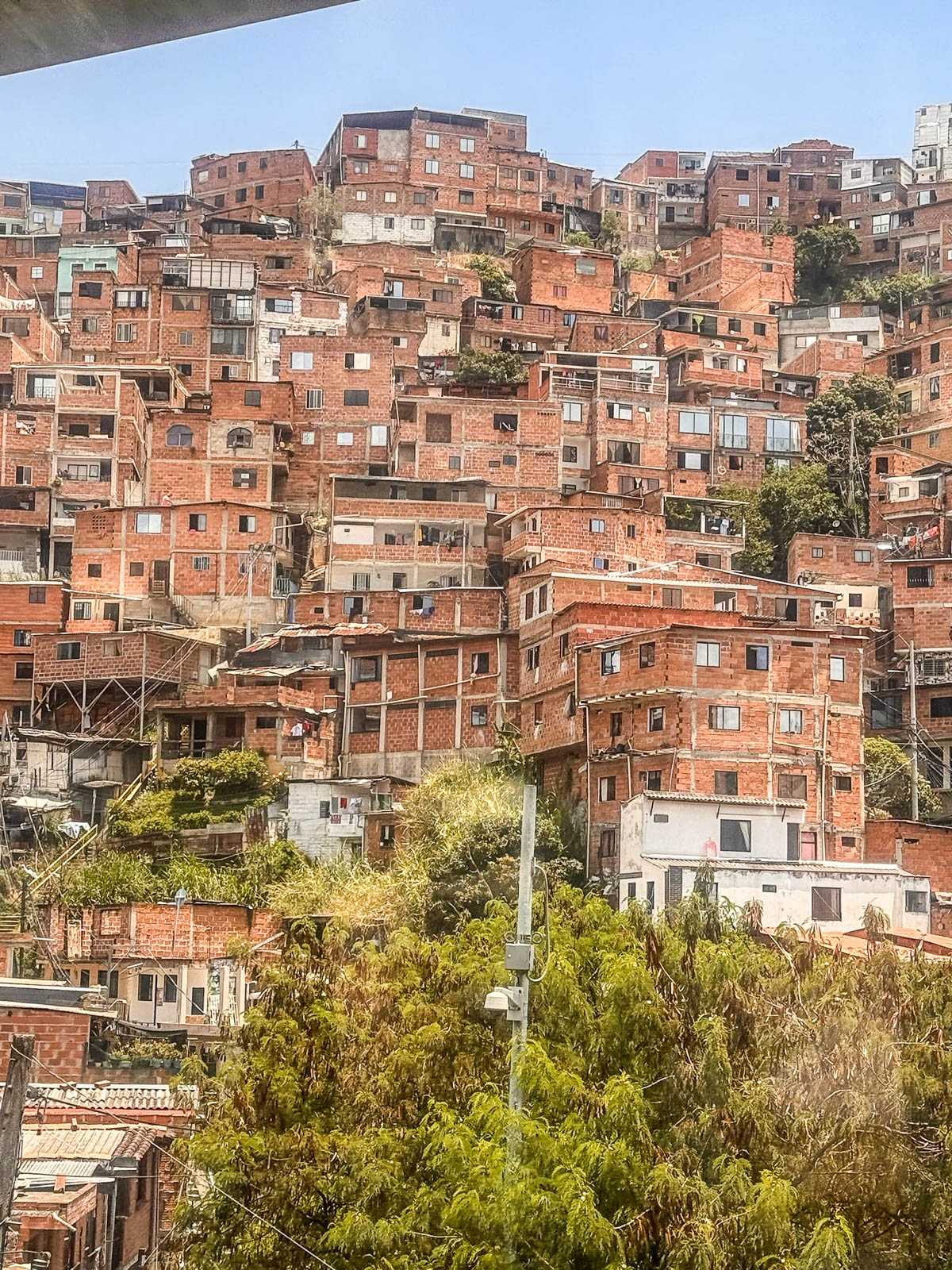
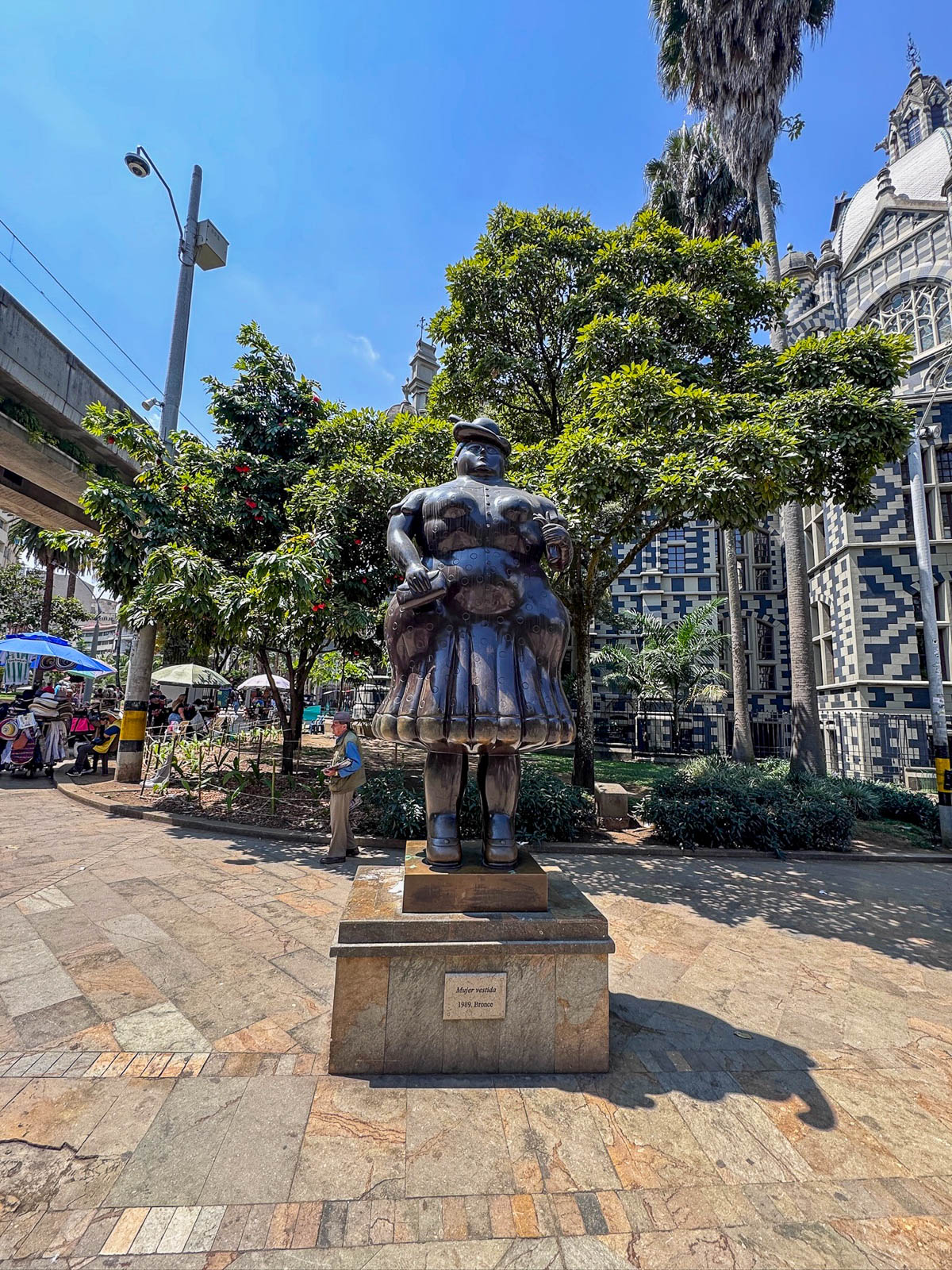
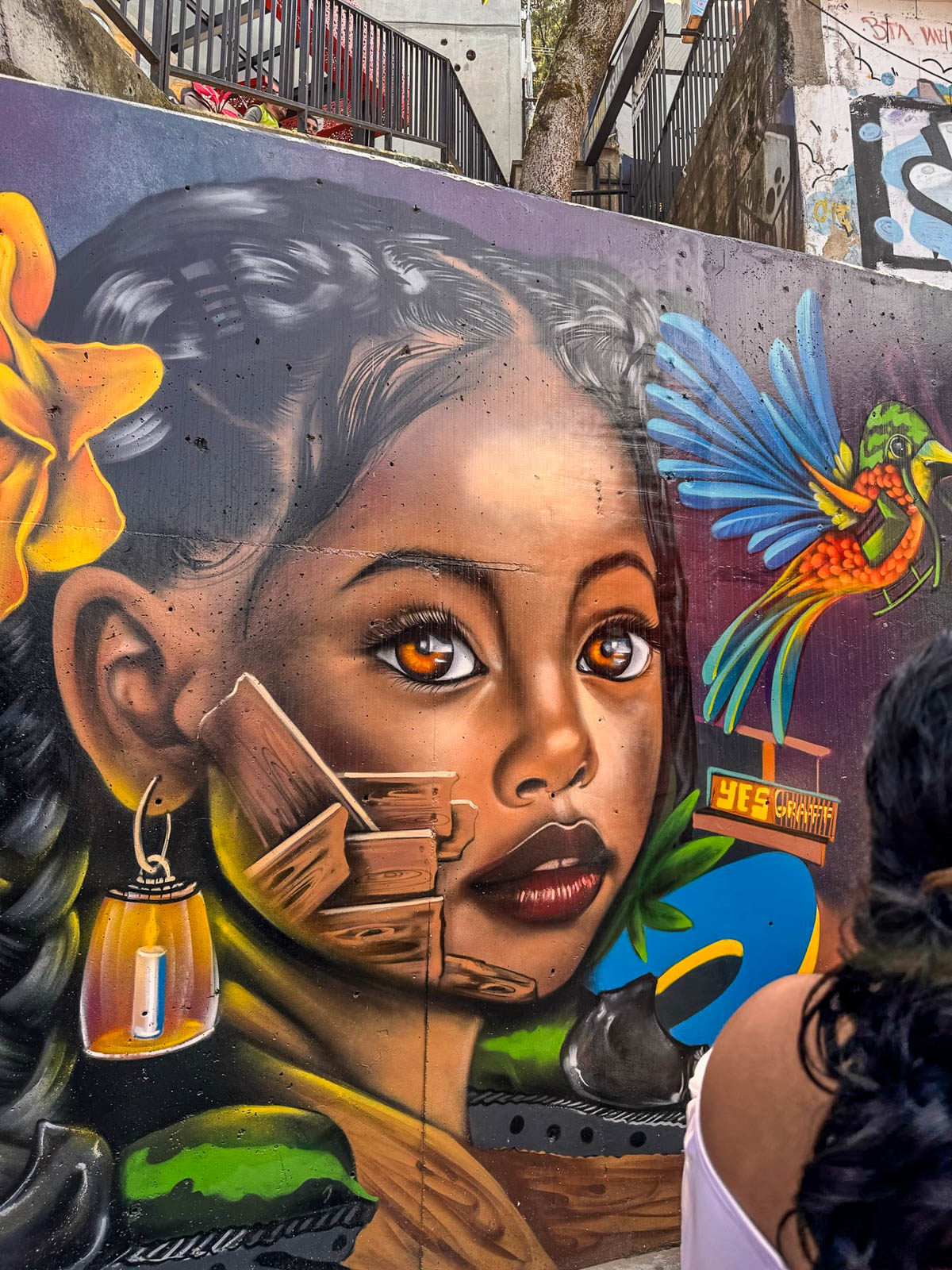
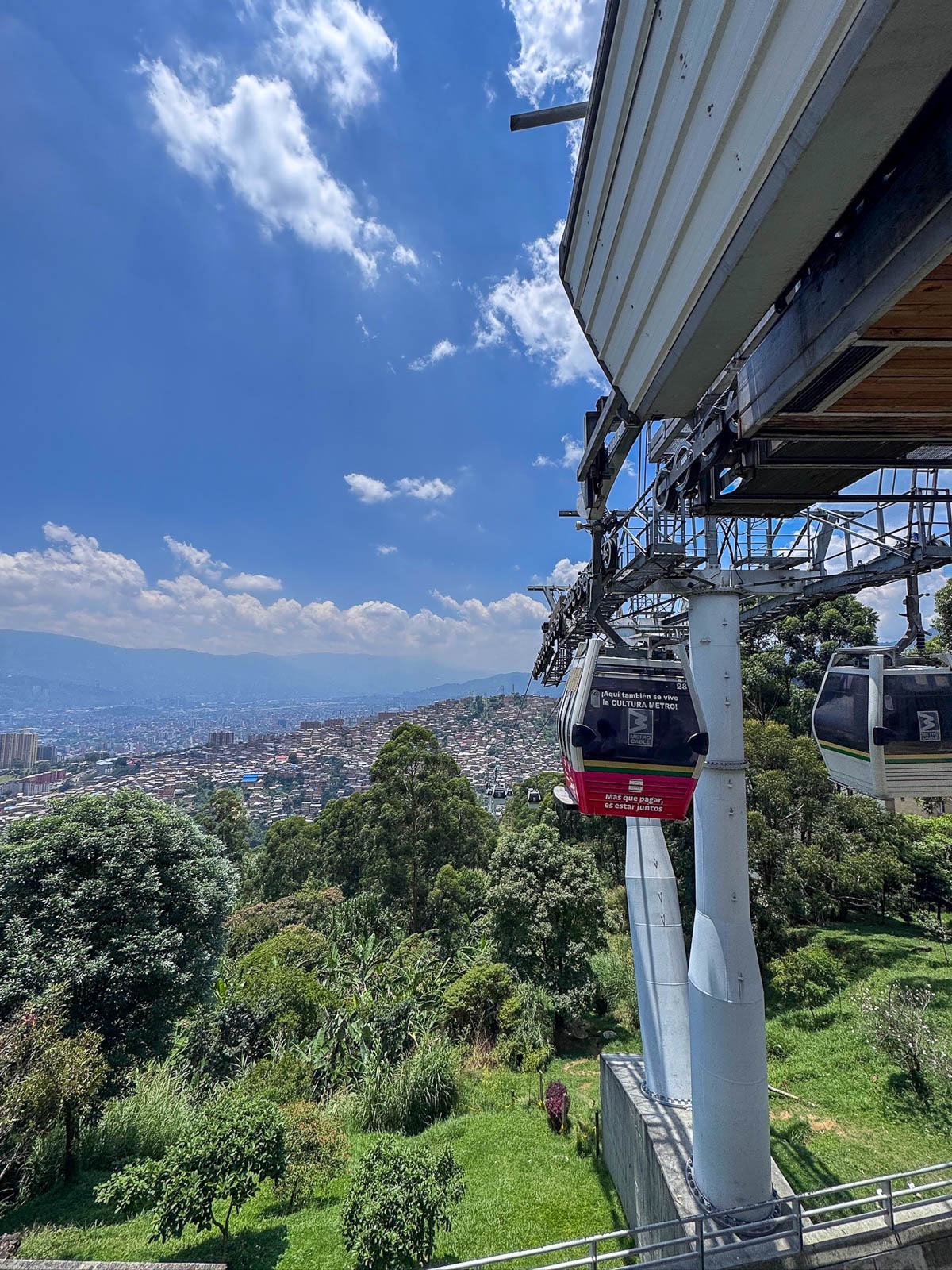
Undoubtedly, the best way to understand Medellín is with a local guide. Ours took us through downtown, onto the metro and up the cable cars for views over the valley, and into Comuna 13. Once one of the city’s most troubled neighborhoods, Comuna 13 is now known for its street art, music, and outdoor escalators.
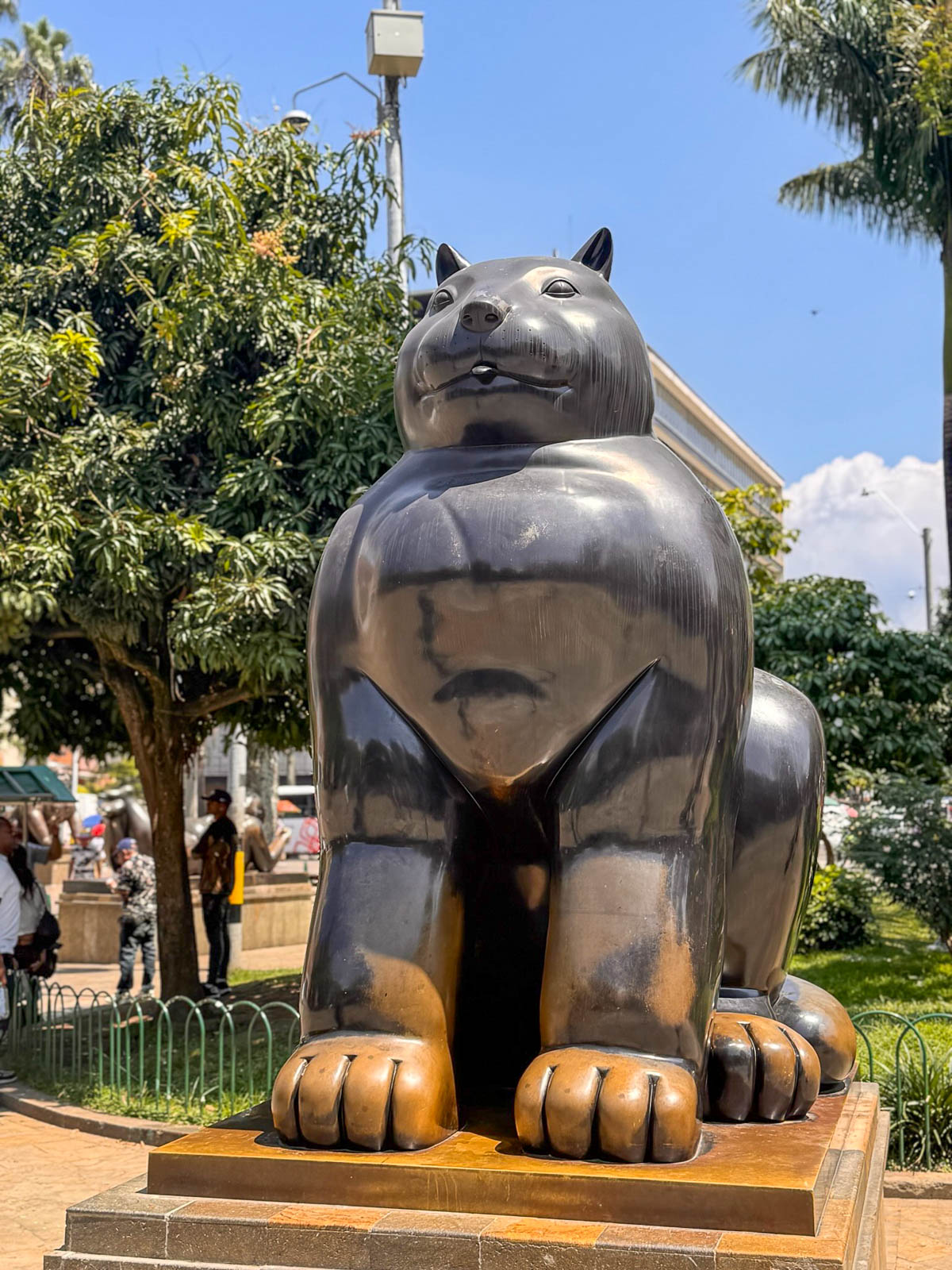
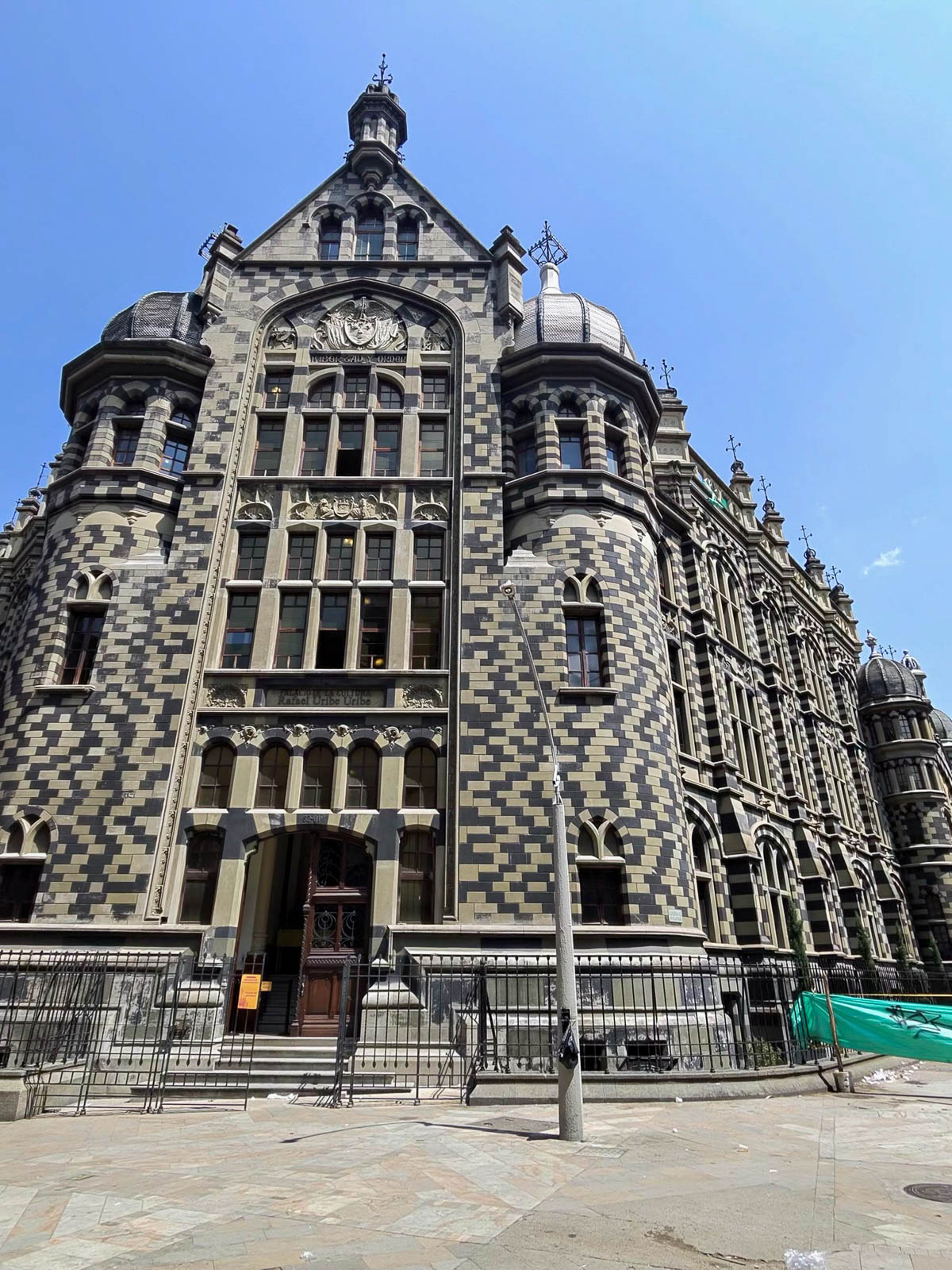
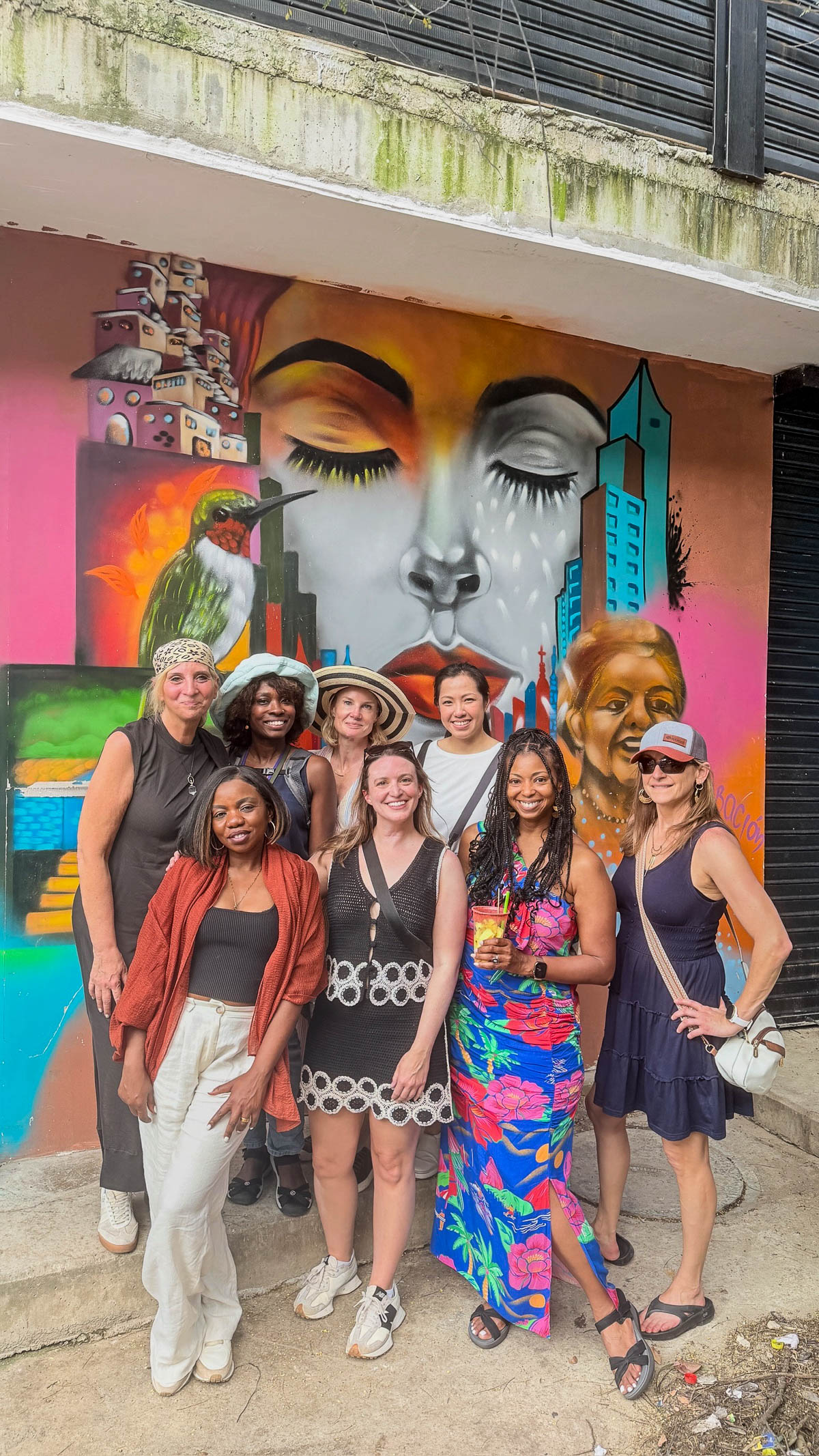

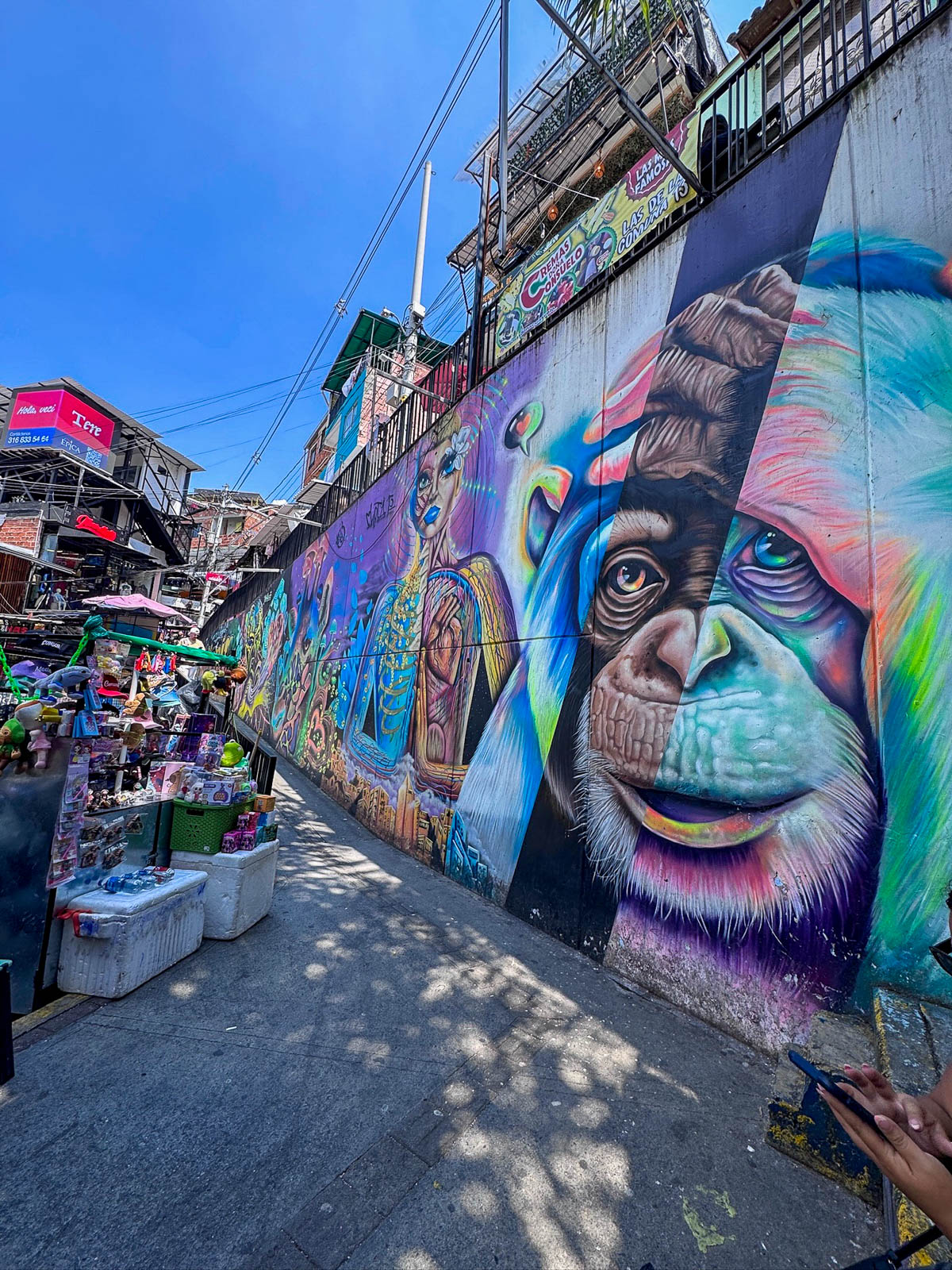
2. Take a Colombian Cooking Class
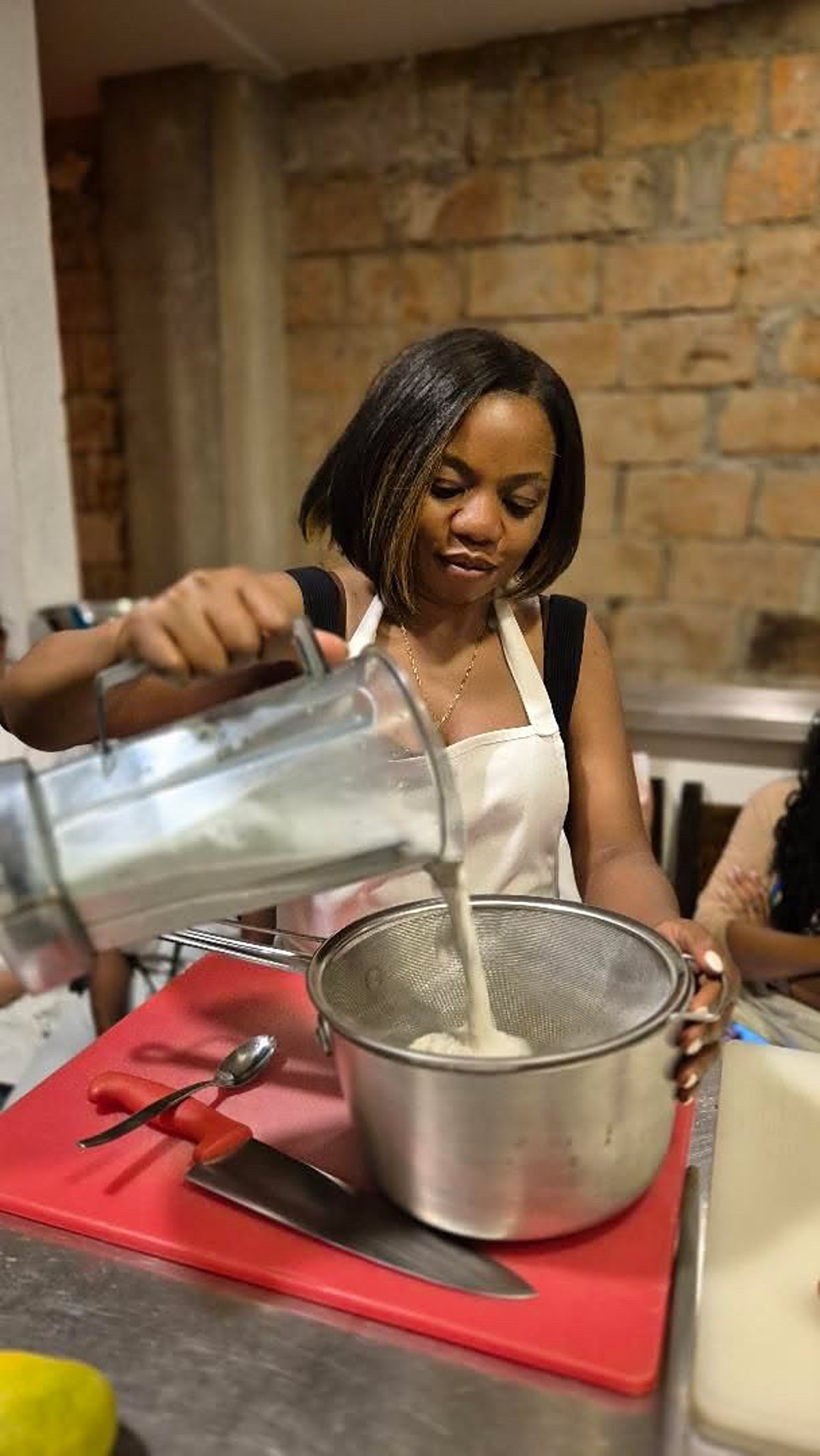
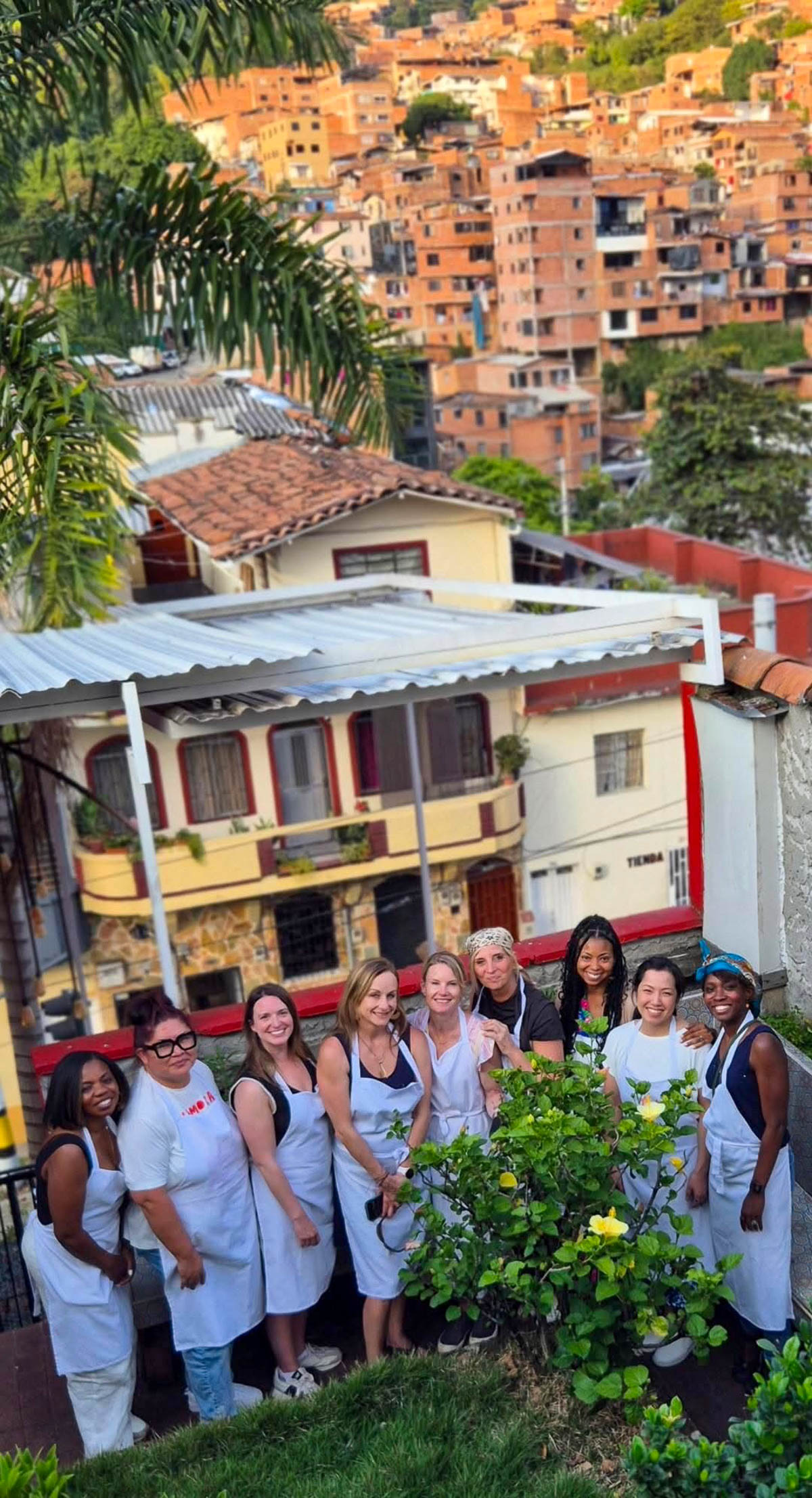
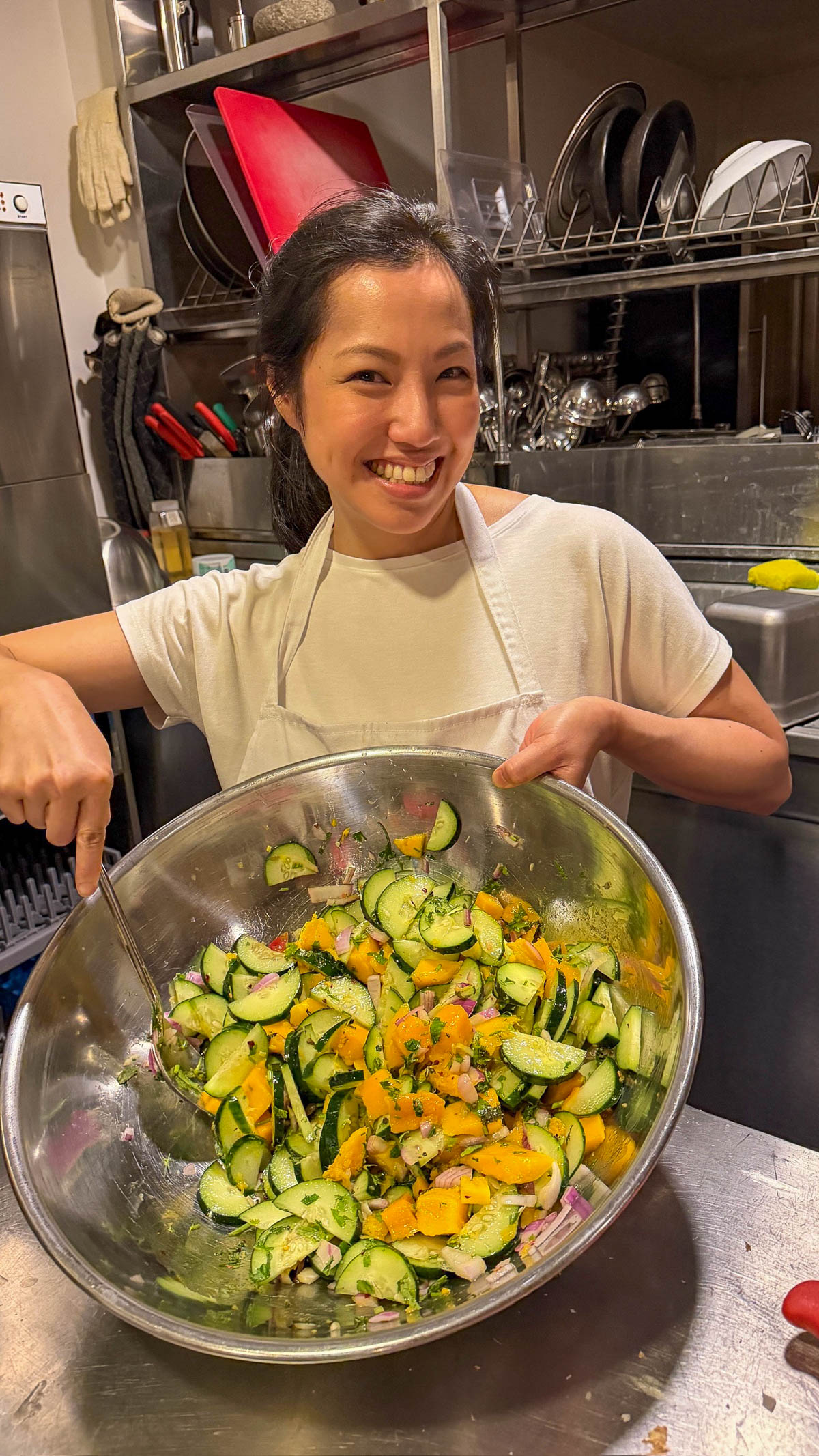
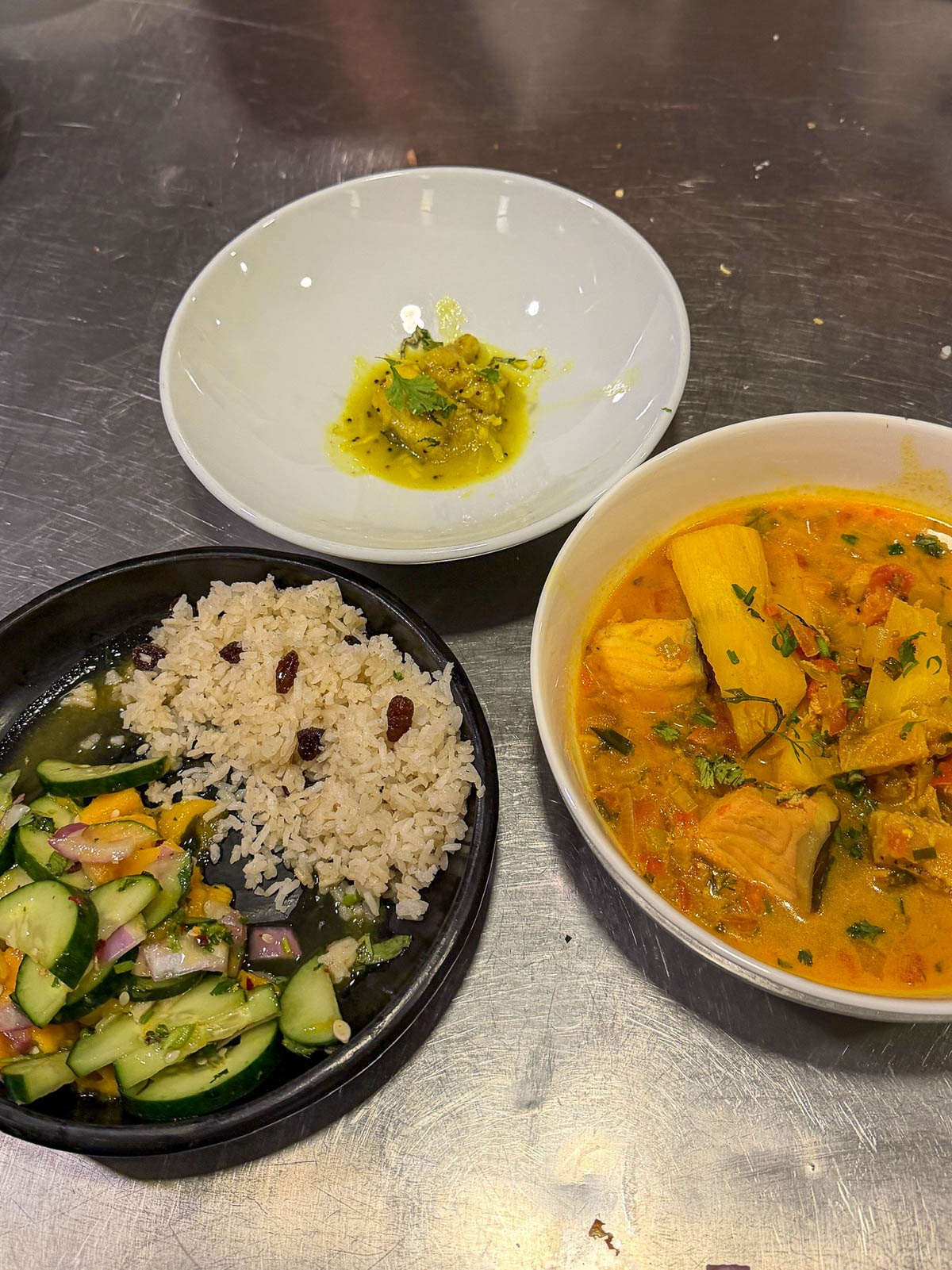
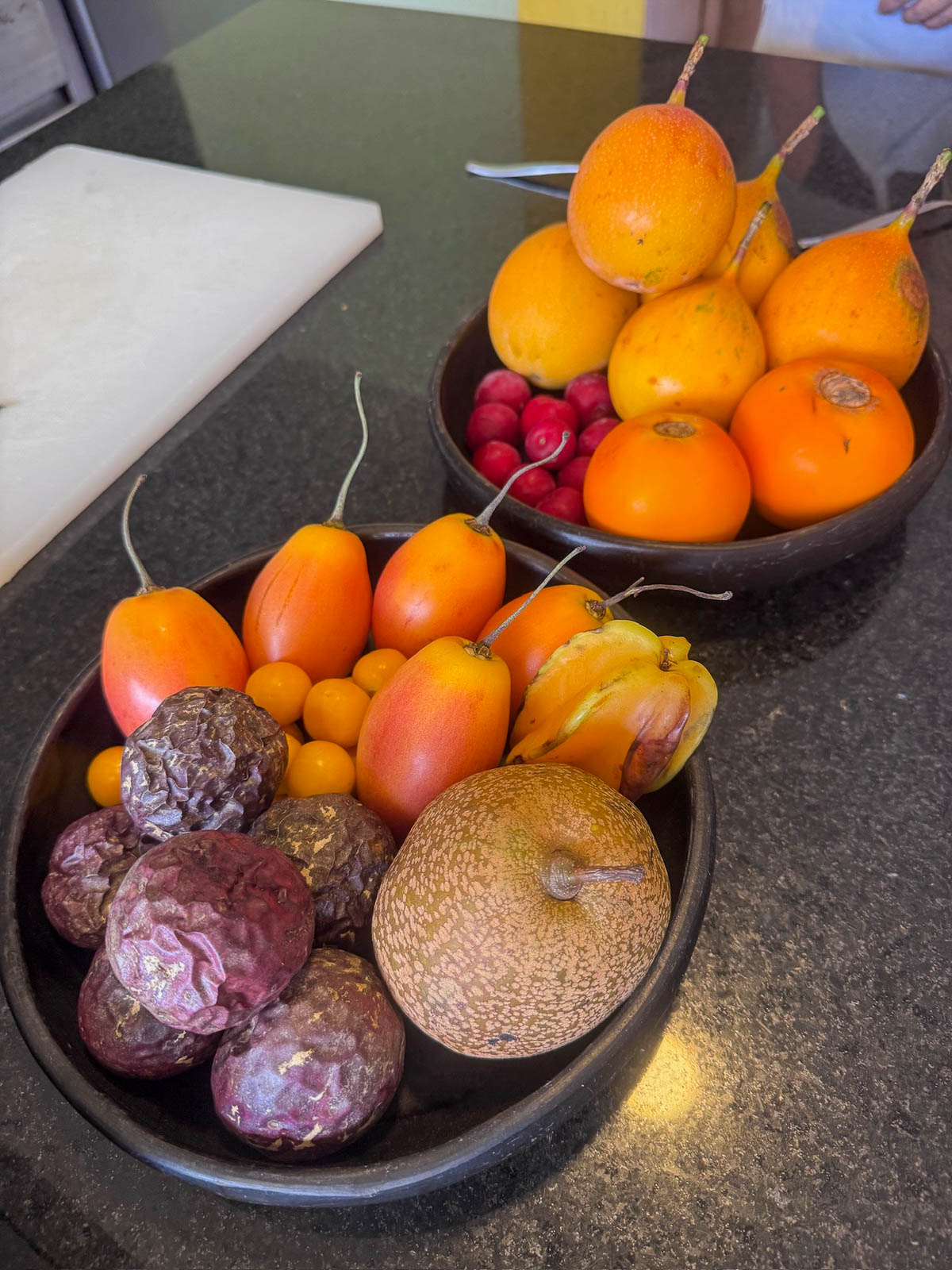
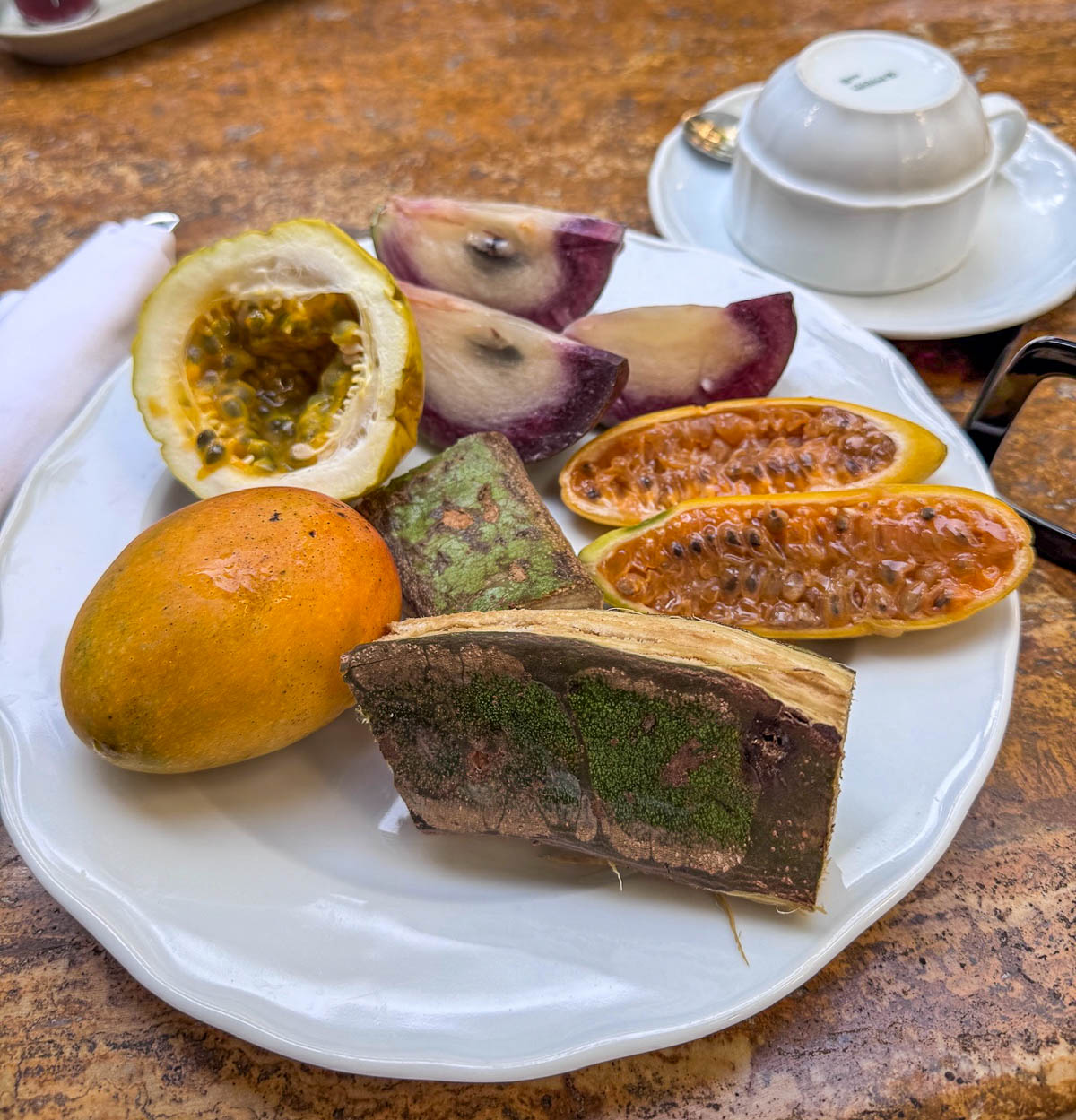
We spent an evening learning to cook traditional Colombian dishes with a local chef, then sat down to eat everything we made. Together, we made a fish stew with yuca in a golden coconut and tomato broth, coconut rice, and a fresh cucumber and mango salad with red onion and cilantro. For the rice and stew, we even squeezed our own coconut milk from freshly grated coconut. We also tasted exotic fruits, including tamarillo, granadilla, gulupa, yellow pitahaya, uchuvas, and lulo. The class is run by Vía Cocina, a community food project in Medellín.
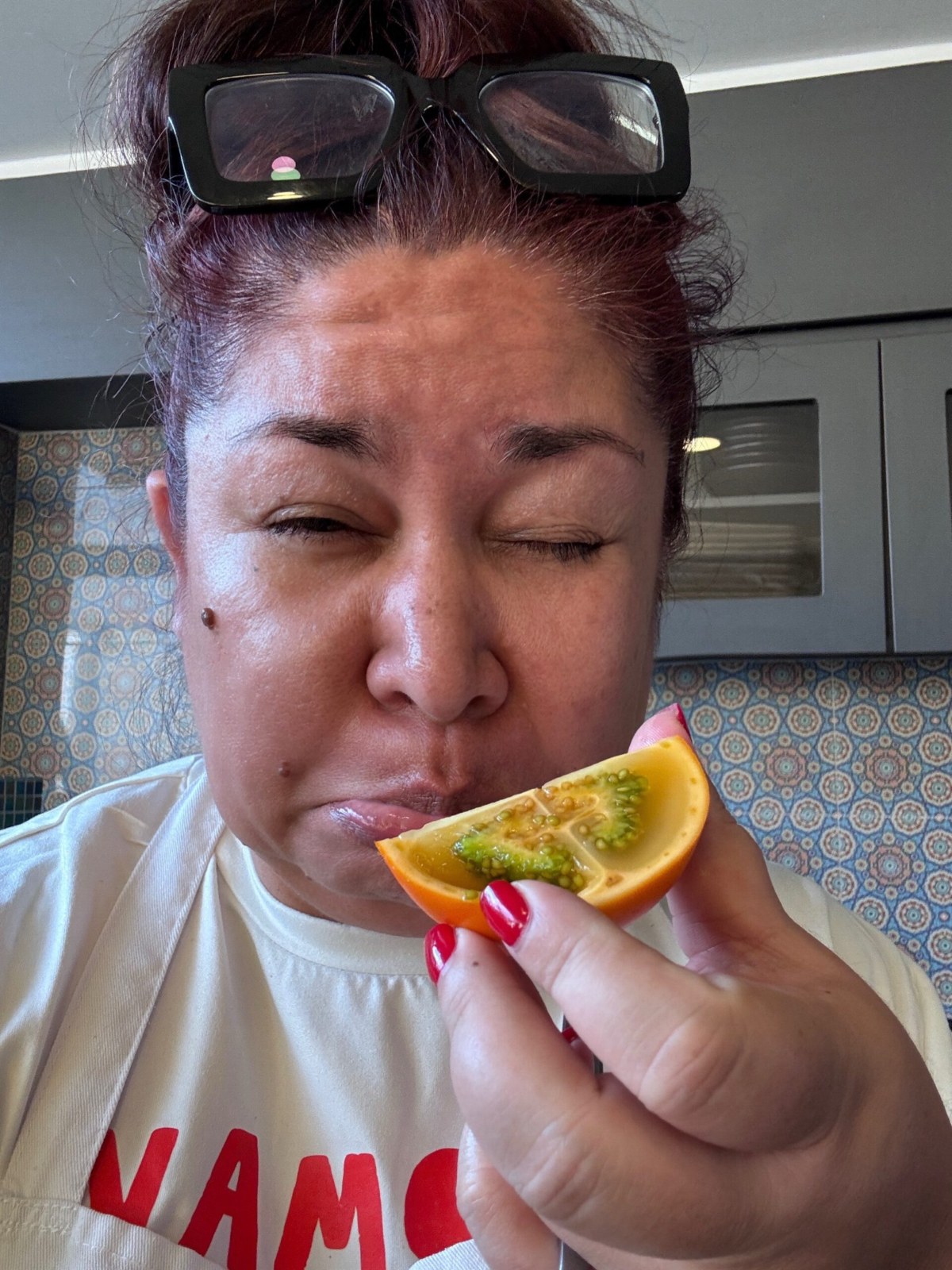
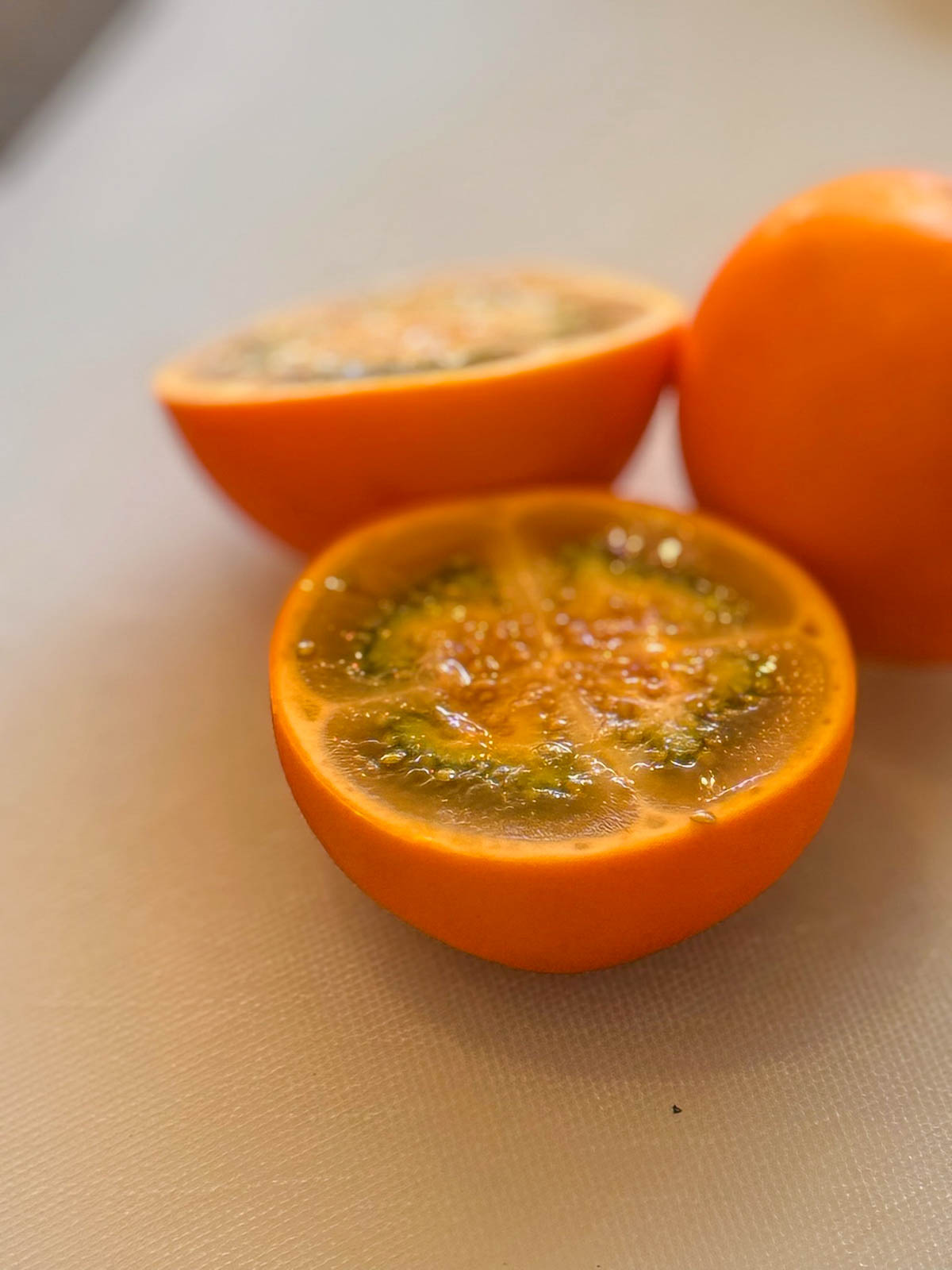
Then there was the lulo. It looks like a little orange tomato, but inside it is bright green, juicy, and so sour that one bite had my whole face puckering, as you can see. Colombians usually blend it with sugar into a fresh juice, and next time, that is exactly how I am having it.
Day Trip to Guatapé
On our last full day, we took a private day trip from Medellín to Guatapé, about two and a half hours away by car. The drive itself is especially beautiful, winding through green mountains and countryside.
When we arrived, I realized Guatapé is one of the most colorful towns I’ve ever seen. Many of the houses have painted panels along their lower walls, called zócalos, and doors painted in every bright color, plus umbrellas strung over the streets. We started with a 90-minute walking tour of Guatapé to get to know the town, then spent the rest of the day wandering, stopping for lunch, and taking in the lake views.
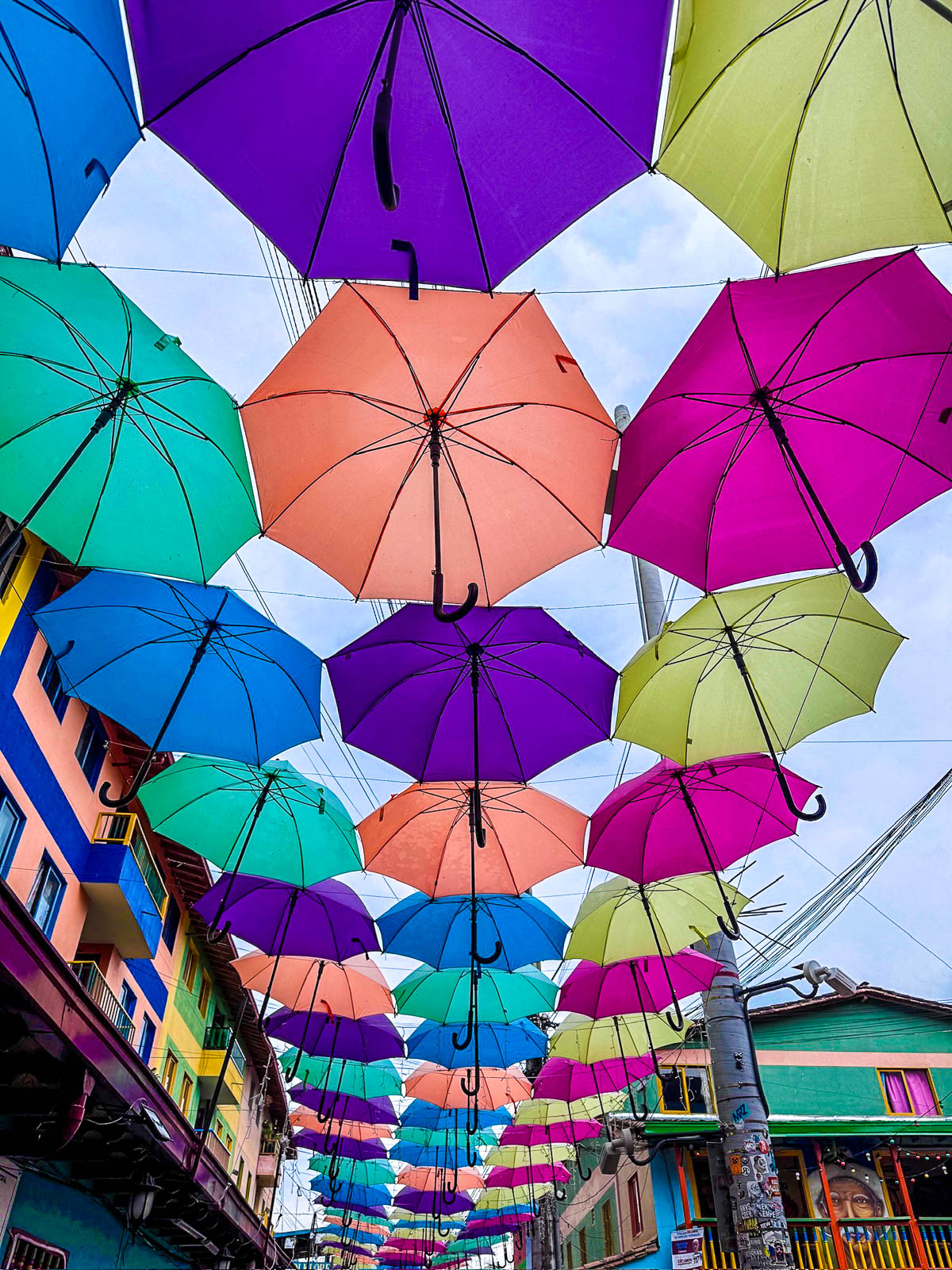
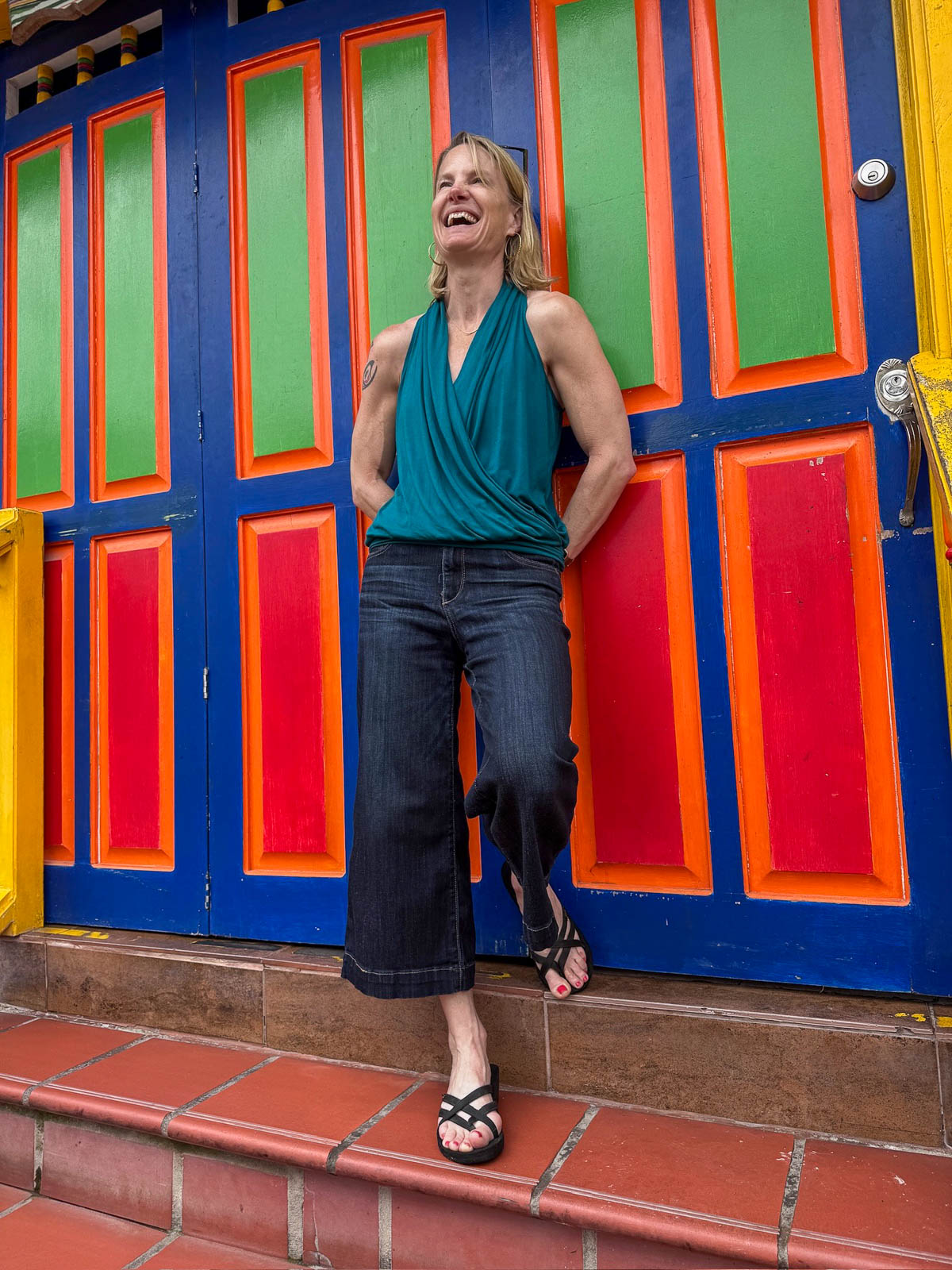
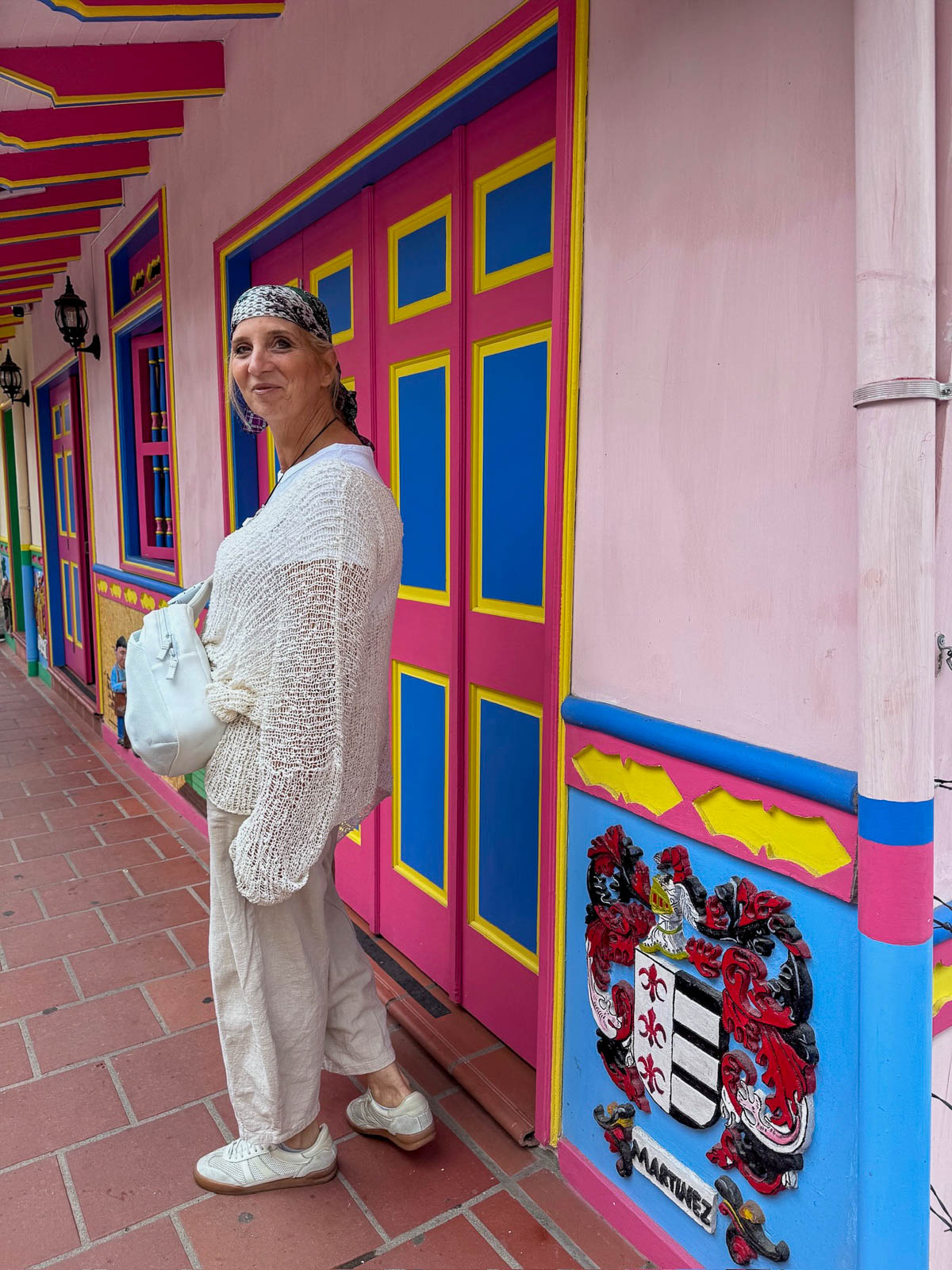
Right outside town is El Peñol, a huge granite rock with a staircase zigzagging up its side. We didn’t climb it ourselves this trip, but if you’re up for it, it’s about 740 steps to the top, with views over the turquoise lakes and green islands.
What to Eat and Where to Eat in Colombia
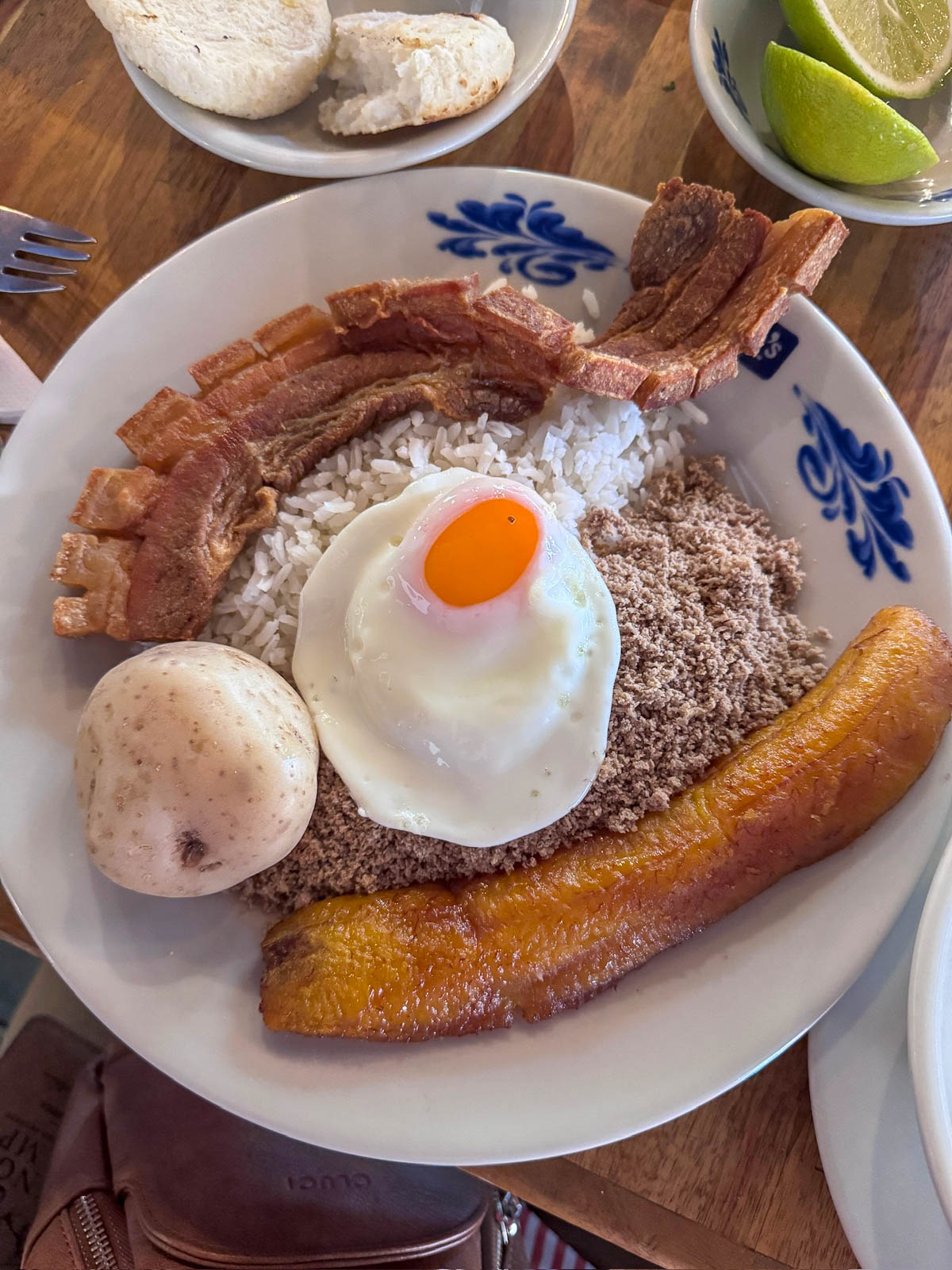
From the coast to the mountains, the food changed as much as the scenery. In Cartagena, it was all about the Caribbean: fresh seafood, fried fish with patacones right by the water, and coconut in everything. In Medellín, the food got heartier, like the huge bandeja paisa I had at Mondongo’s, and everywhere we went there were delicious exotic fruits.
What to Eat
- Arepas: Corn cakes that show up at nearly every meal, often with cheese, cream, or a spicy sauce.
- Bandeja paisa: Medellín’s famous platter of rice, beans, a fried egg, chicharrón, sweet plantain, and an arepa. Come hungry.
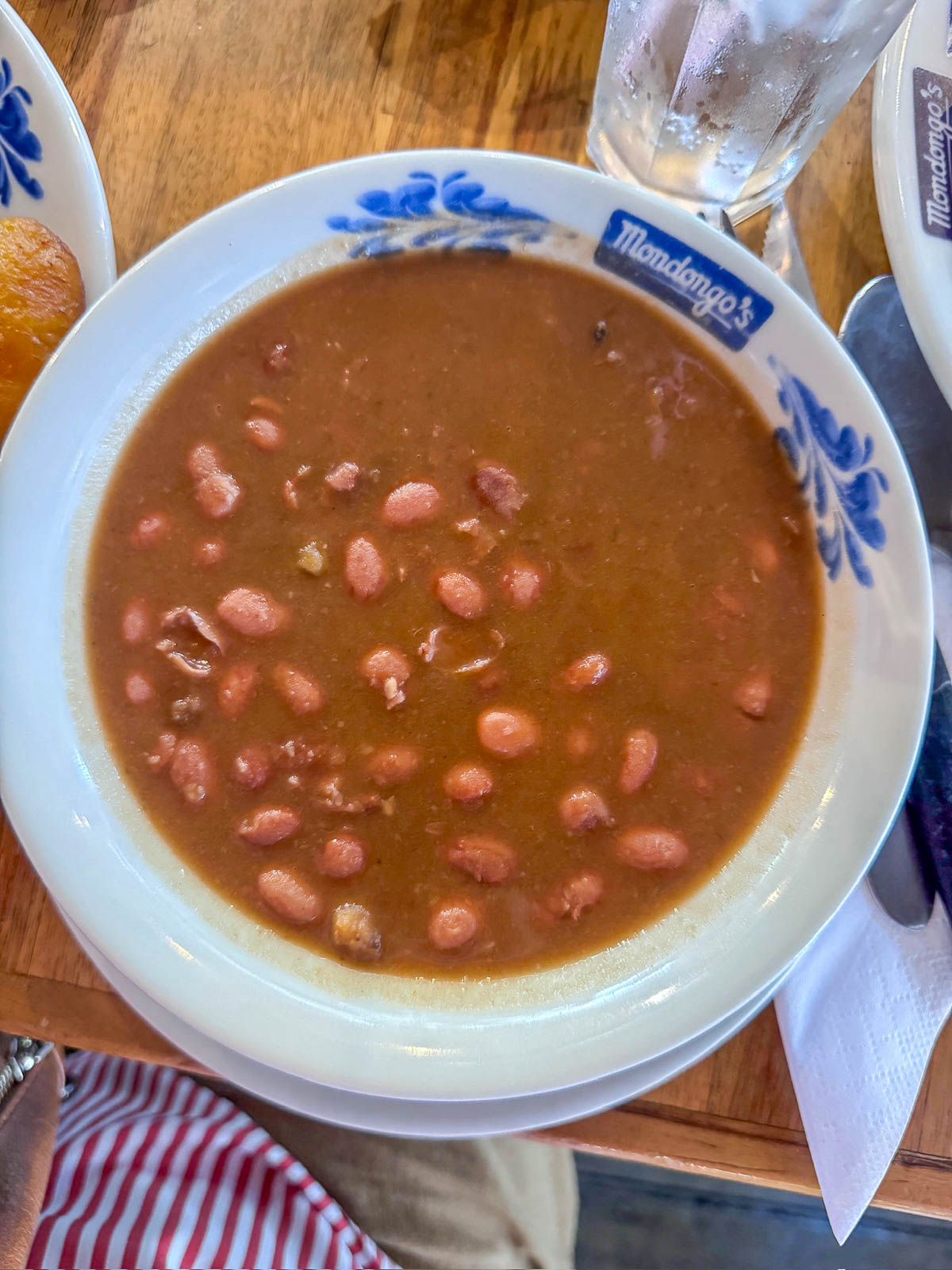
- Frijoles: A hearty red bean soup that often comes alongside bandeja paisa.

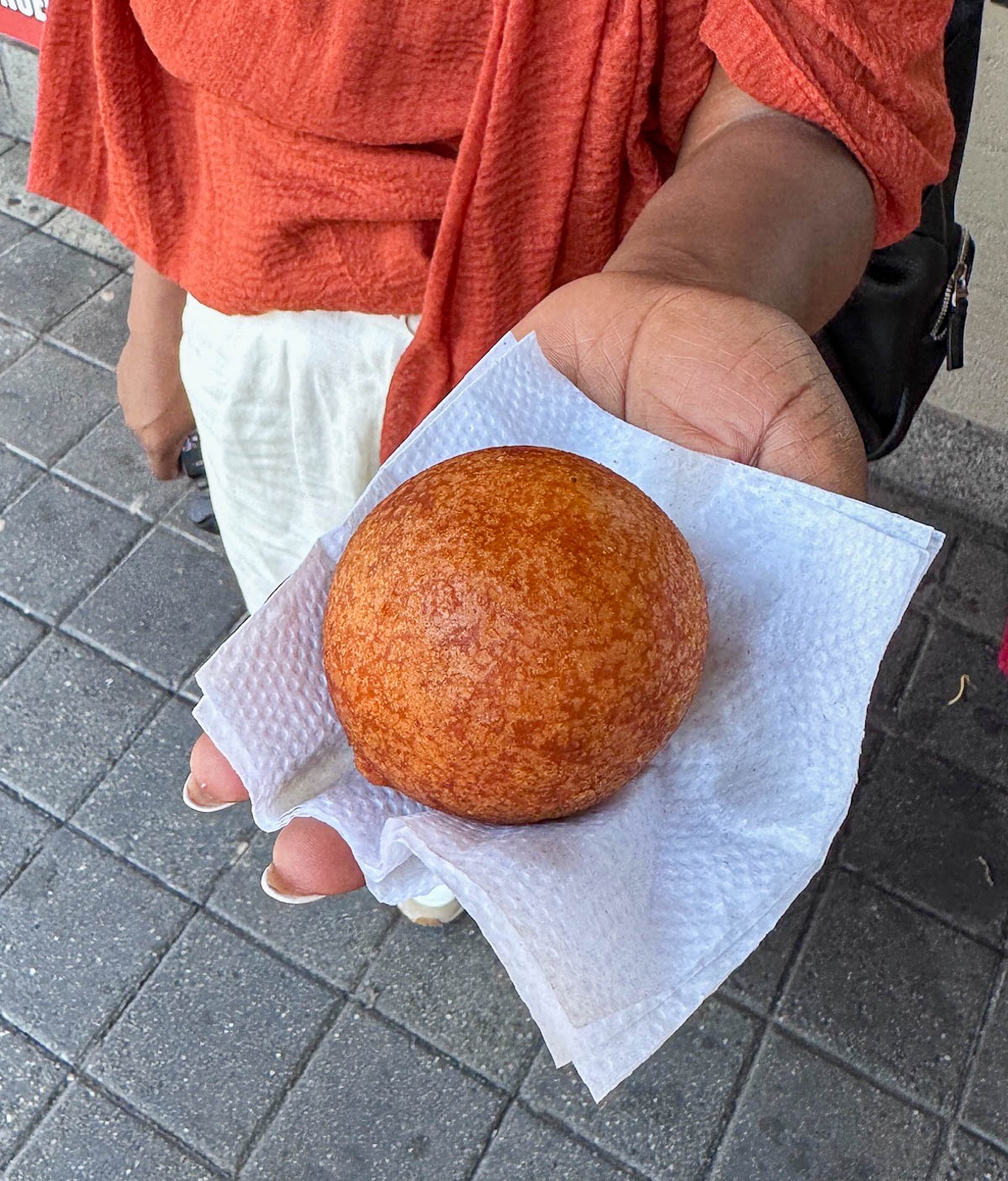
- Buñuelos: Fried balls of cheesy dough, crisp outside and soft inside. Eat them warm.
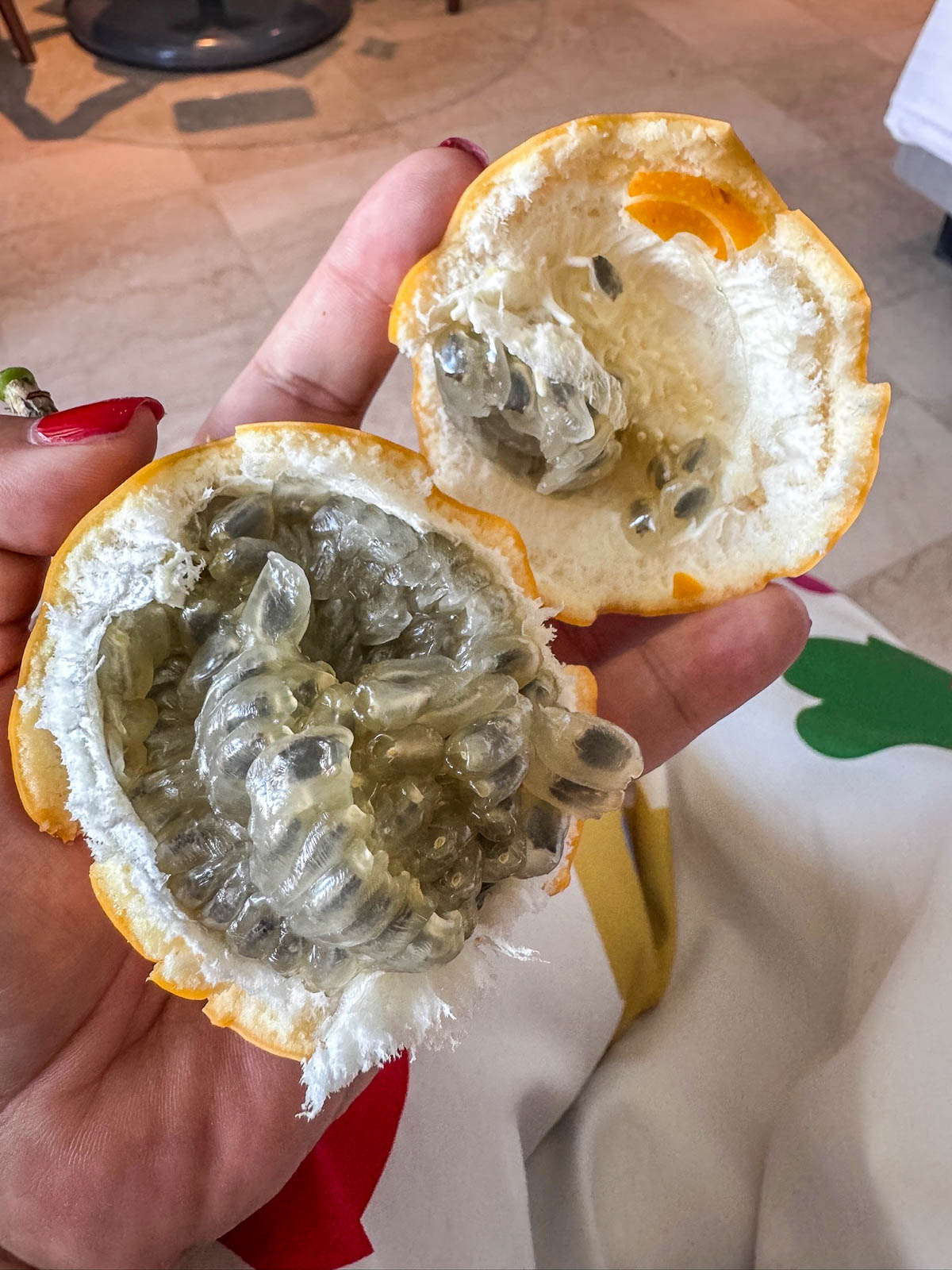
- Exotic fruit: Colombia has fruits you’ve probably never tried. Granadilla is one of the best fruits you can eat: crack open the shell and slurp the sweet seeds straight out. Try tart lulo too.
- Empanadas: Crispy fried turnovers filled with meat and potato, perfect as a snack on the go.
- Ceviche: Fresh seafood marinated in lime, a must on the coast in Cartagena.
- Limonada de coco: A creamy, frosty coconut limeade that is so refreshing in the Cartagena heat.
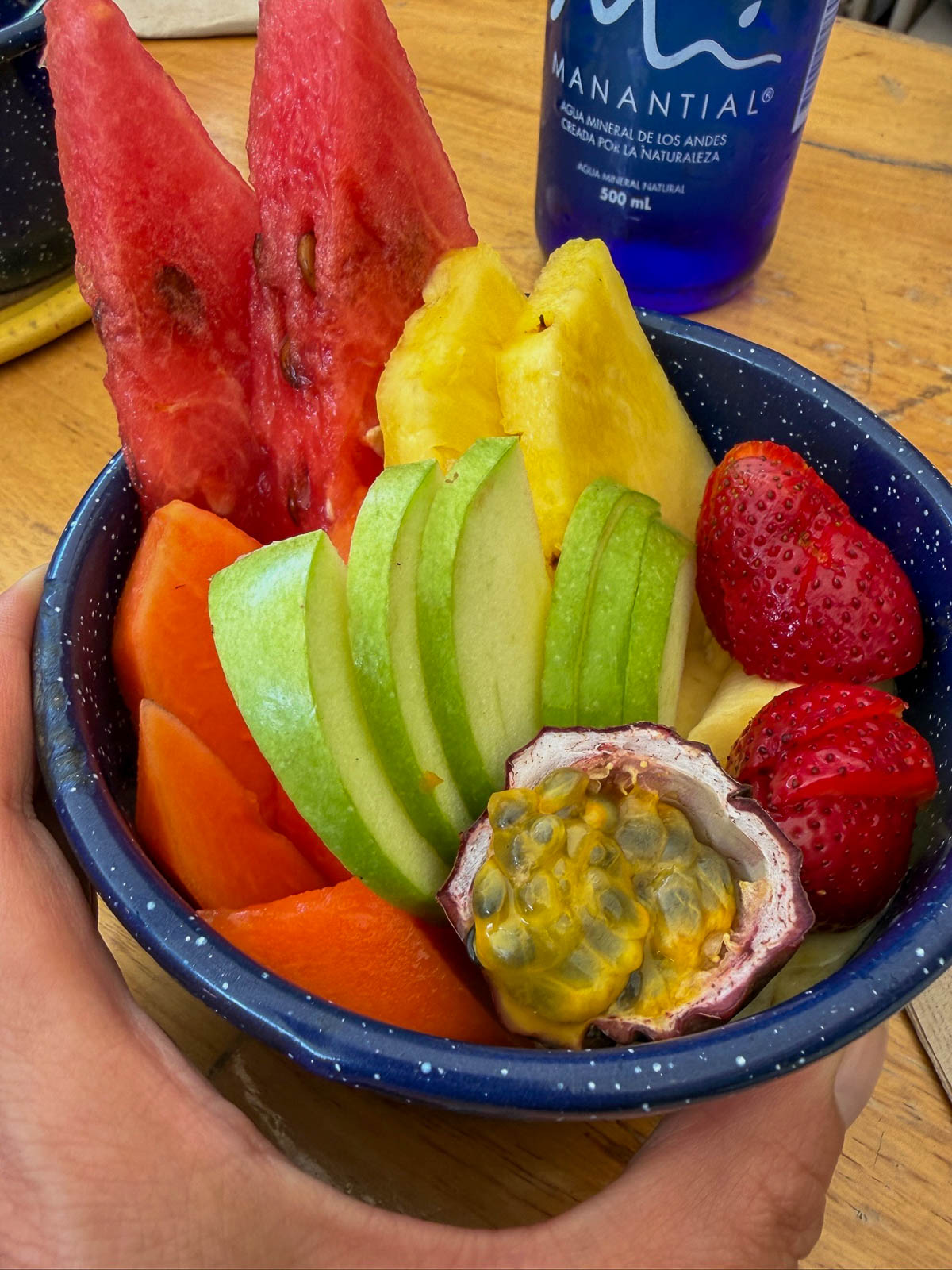
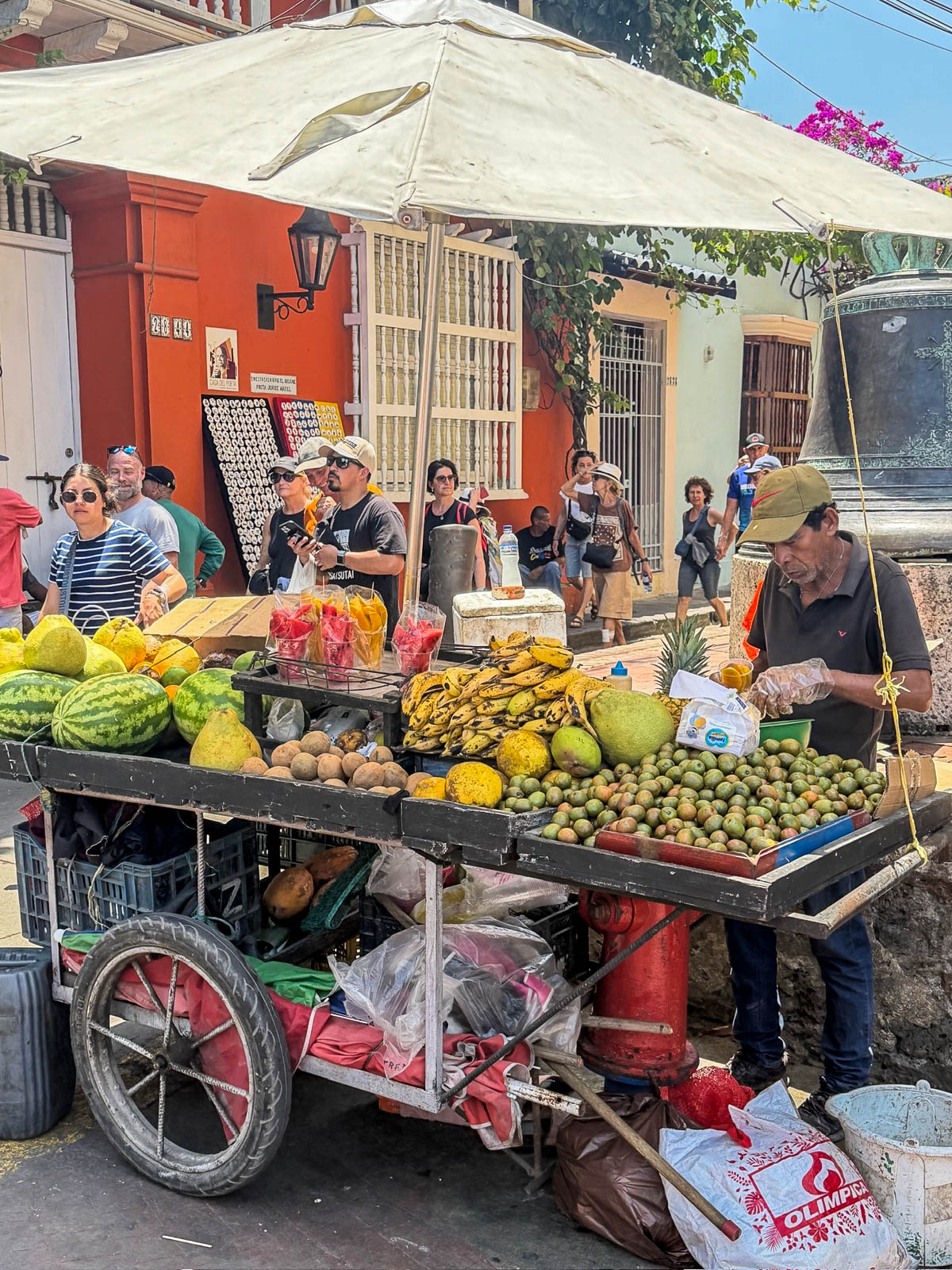
- Fruit cups: Street carts sell cups of fresh cut watermelon, pineapple, mango, and passion fruit. Perfect on a hot afternoon.
Where We Ate
- Candé, Cartagena: Our welcome dinner, with Colombian dishes served alongside live music and dance.
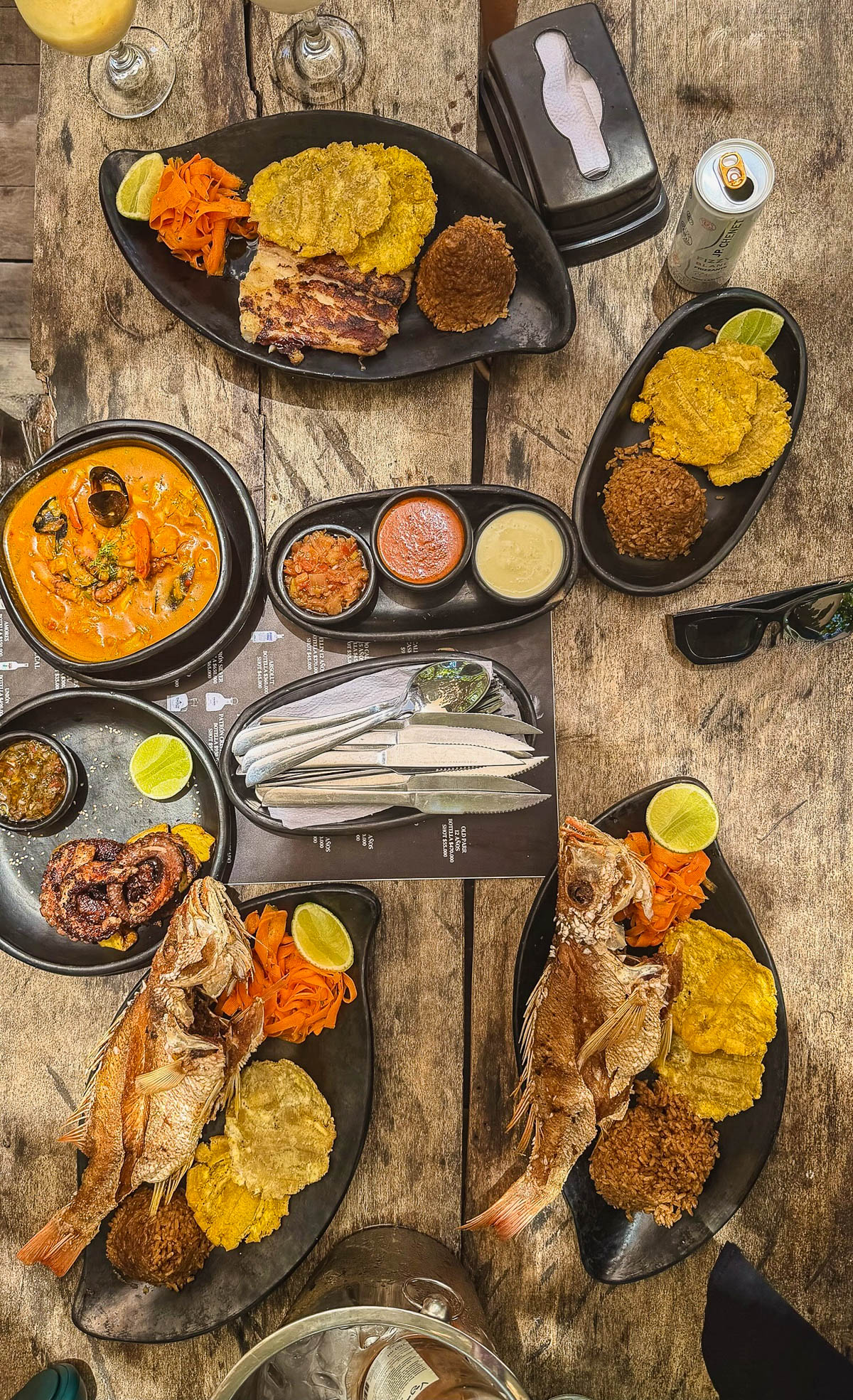
- PA’UE Beach Lounge, Rosario Islands: Fried whole fish and patacones, crispy fried plantains, eaten right by the water on our yacht day.
- Cooking class, Medellín: The dinner we made ourselves.
- Mondongo’s, Medellín: Where I had my bandeja paisa on our first night in the city.
- Street food: Some of our best bites came from carts and stands, like fresh fruit cups, arepas, and warm buñuelos we ate as we walked.
- Our hotels: On busy days, we kept it easy and ate at the restaurants at the Sofitel and the Marquee.
On Our List for Next Time
We didn’t get to these ourselves, but they came highly recommended and are on my list for my next trip.
- Celele, Cartagena: A restaurant built around Caribbean Colombian ingredients.
- Mar y Zielo, Cartagena: Recommended for dinner.
- Movich rooftop, Cartagena: A popular spot for sunset drinks with views over the Old City.
- El Cielo, Medellín: The tasting menu restaurant from chef Juan Manuel Barrientos.
Getting There and Getting Around
Getting there: We flew into Cartagena’s Rafael Núñez International Airport (CTG) and flew home from Medellín’s José María Córdova International Airport (MDE). As a result, flying in and out of different cities saved us from doubling back. Many flights from the US connect through Miami, Atlanta, Panama City, or Lima. I live in Miami, so getting there was easy, with a direct flight from home to Cartagena.
Airport transfers: We booked our airport pickups ahead of time, so a driver was waiting when we landed. After a long travel day, that was especially worth it.
Between cities: We flew JetSMART from Cartagena to Medellín, a quick flight of about an hour and 15 minutes. We took the 8:04 am flight, which had us landing by 9:19 am with most of the day still ahead.
In Cartagena: The Old City is small and very walkable. We walked almost everywhere.
In Medellín: We used Uber to get around, and our city tour included the metro and cable cars.
To Guatapé: We went with a private driver as a day trip from Medellín.
Packing: Pack light and pack for two climates: hot and humid in Cartagena, mild in Medellín. Our capsule wardrobe guide makes it easy.
Useful Apps
- Uber for rides in Medellín
- WhatsApp for messaging drivers and tour guides
- Google Translate for menus and conversations, since a little Spanish goes a long way
- Google Maps for walking the Old City
Colombia FAQs
Is Colombia safe for women travelers?
We felt safe in Cartagena, Medellín, and Guatapé, which are all well established tourist areas. We still used common sense: we stayed in trusted neighborhoods, used booked drivers or Uber, kept bags zipped, and didn’t wander alone late at night. Besides, traveling as a group made it even easier to relax and enjoy ourselves.
How many days do you need for Cartagena and Medellín?
We spent three nights in each city, and it felt like the right amount for a first visit. That gave us time for a full day on the water in Cartagena, as well as a day trip to Guatapé from Medellín. However, if you have more time, add a day in each city to slow down.
Is a private yacht worth it for the Rosario Islands?
For a group, absolutely. Having our own yacht meant we chose where to stop, how long to stay, and when to head back, instead of following a crowded group tour’s schedule. It was the highlight of my trip.
Do you need a visa to visit Colombia?
As of this posting in October 2026, travelers from the US and Canada don’t need a visa for tourist stays of up to 90 days. Your passport must be valid for your whole stay (the US State Department recommends six months of validity), and you’ll need one blank page for the entry stamp. You’ll also need to fill out Colombia’s free Check-MIG form online between 72 hours and 1 hour before your flight, and immigration may ask to see a return or onward ticket. Canadians also pay an entry fee on arrival. Rules can change, so check the US State Department or Government of Canada page for Colombia before you go.
How many steps are there to the top of El Peñol?
The climb up El Peñol is about 740 steps. We didn’t make the climb ourselves, but if you do, take it slow, bring water, and wear comfortable shoes.
What should I wear in Colombia?
In Cartagena, for example, think light dresses, linen, sandals, and plenty of sun protection. Medellín is a little more city chic, with casual but polished outfits. For Guatapé, wear comfortable walking shoes and a sun hat. Finally, a light jacket is handy for evenings and air conditioned spaces.
Final Thoughts
Colombia surprised me in the best way. Ten women, one week, and three completely different places: the colorful walled city of Cartagena, the mountains of Medellín, and the painted streets of Guatapé. We danced salsa, floated in turquoise water, cooked with a local chef, and ate more granadilla than I can count. If Colombia has been on your list, this is your sign to go, and to bring your girls.